OSENC Magnetic Separation
Find the Process or Mechanical Root Cause
When magnetic-separation performance changes, first compare the current material, feed, working distance, speed, cleaning state, and installation with the approved baseline. Many apparent “weak magnet” problems are caused by deeper burden, poor liberation, buildup, unstable feed, wrong splitter position, changed contamination, or mechanical faults.
Send the Problem and Operating Records Use the Maintenance Checklist
Stop Before Diagnosing If Unsafe
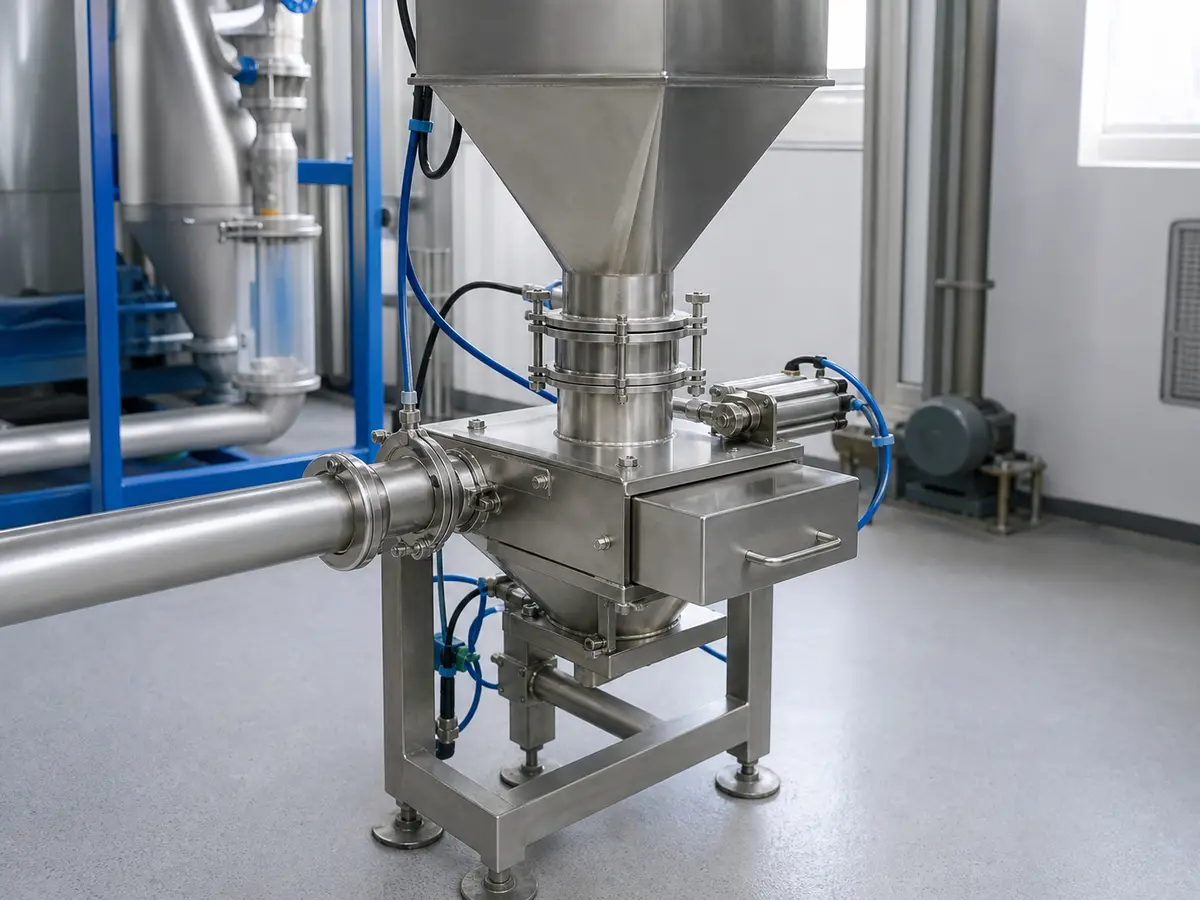
Stop and isolate the equipment if guards are missing, structures or suspensions move, belts contact frames, bearings seize or overheat, electrical faults occur, material plugs dangerously, rotating parts are exposed, or captured metal can strike personnel. Troubleshooting does not authorize reaching into running equipment.
Poor Iron Capture
| Check | Evidence | Possible correction |
|---|---|---|
| Working distance | Actual height and peak burden versus approved values | Restore feed/height condition or reselect equipment |
| Feed presentation | Surges, deep layer, uneven width, buried target | Stabilize and spread feed |
| Contaminant | Material, size, shape, attachment, magnetic response | Test the actual target; use another technology if needed |
| Exposure time | Belt or drum speed versus baseline | Review approved speed and process capacity |
| Magnetic surface | Product or iron buildup creating a gap | Clean and reset the interval |
| Installation | Position, orientation, nearby steel, magnetic arc | Compare with the approved drawing |
Captured Iron Falls Back
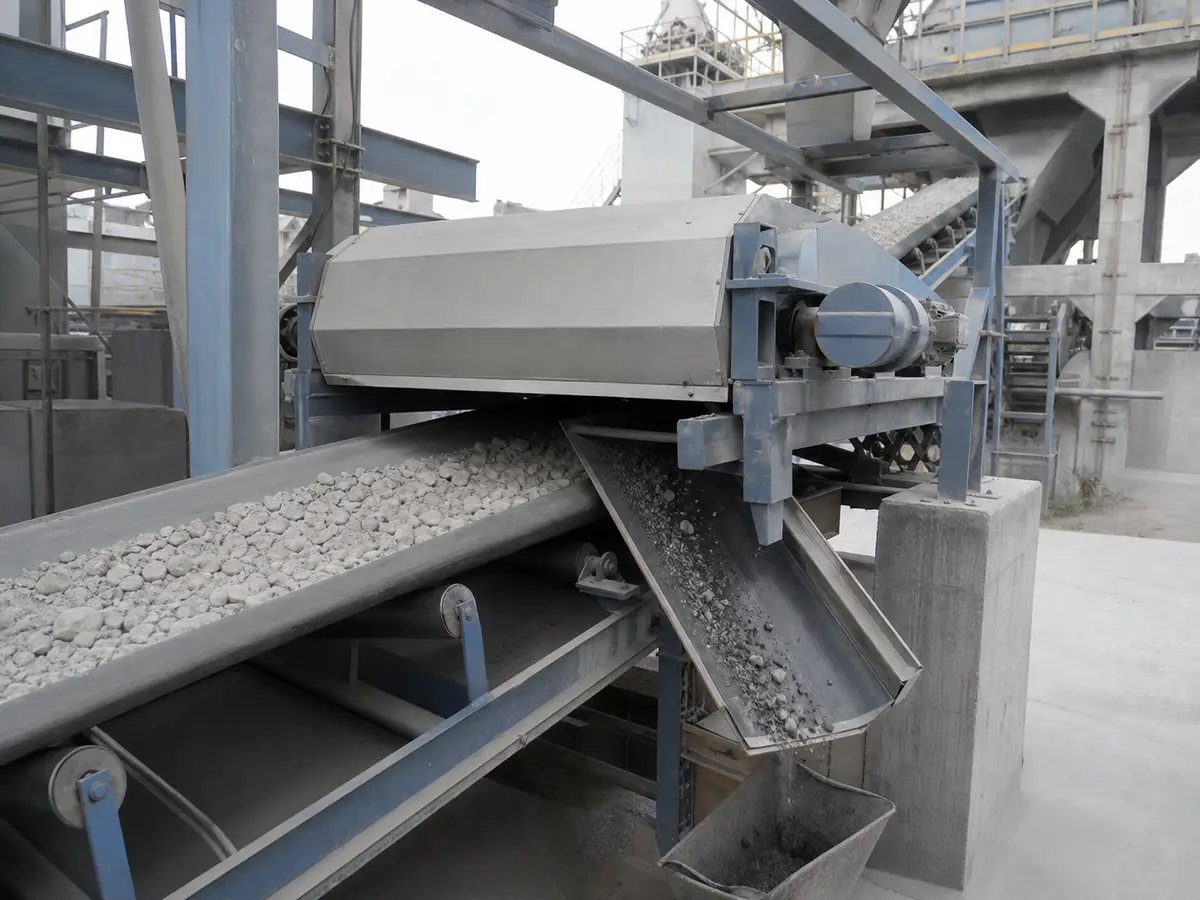
- Cleaning belt, drum, or pulley release point is not aligned with the collection route.
- The collection bin is full or discharge chute is blocked.
- Long wire or large pieces catch on guards, cleats, chutes, or nearby steel.
- The manual-clean magnet exceeds its safe accumulation limit.
- Splitter position, speed, or material trajectory changed.
Powder Plugs or Bridges
Check moisture, oil, temperature, compaction, static, tube spacing, rows, chute angle, feed surge, and product buildup. Do not solve plugging merely by removing magnetic elements if doing so leaves an unreviewed contamination-control gap. Reassess the opening and process position.
Overband Belt Tracking Problems
Check frame and roller alignment, equal tension, buildup, trapped wire, joint condition, roller rotation, uneven captured load, and structural distortion. Make controlled adjustments only under the equipment procedure. See the overband maintenance guide.
Drum Fractions Are Mixed
Confirm feed distribution, liberation, speed, rotation, magnetic arc, shell buildup, splitter, chute rebound, and airflow. Collect defined samples from both fractions before and after one controlled change. See splitter adjustment.
Abnormal Heat, Noise or Vibration
Compare bearings, drive, alignment, fasteners, rotating clearances, wrapping, buildup, lubrication, load, and ambient conditions with the baseline. A permanent magnet itself does not explain mechanical bearing heat. Use component-manufacturer limits and qualified inspection.
Information to Send for Support
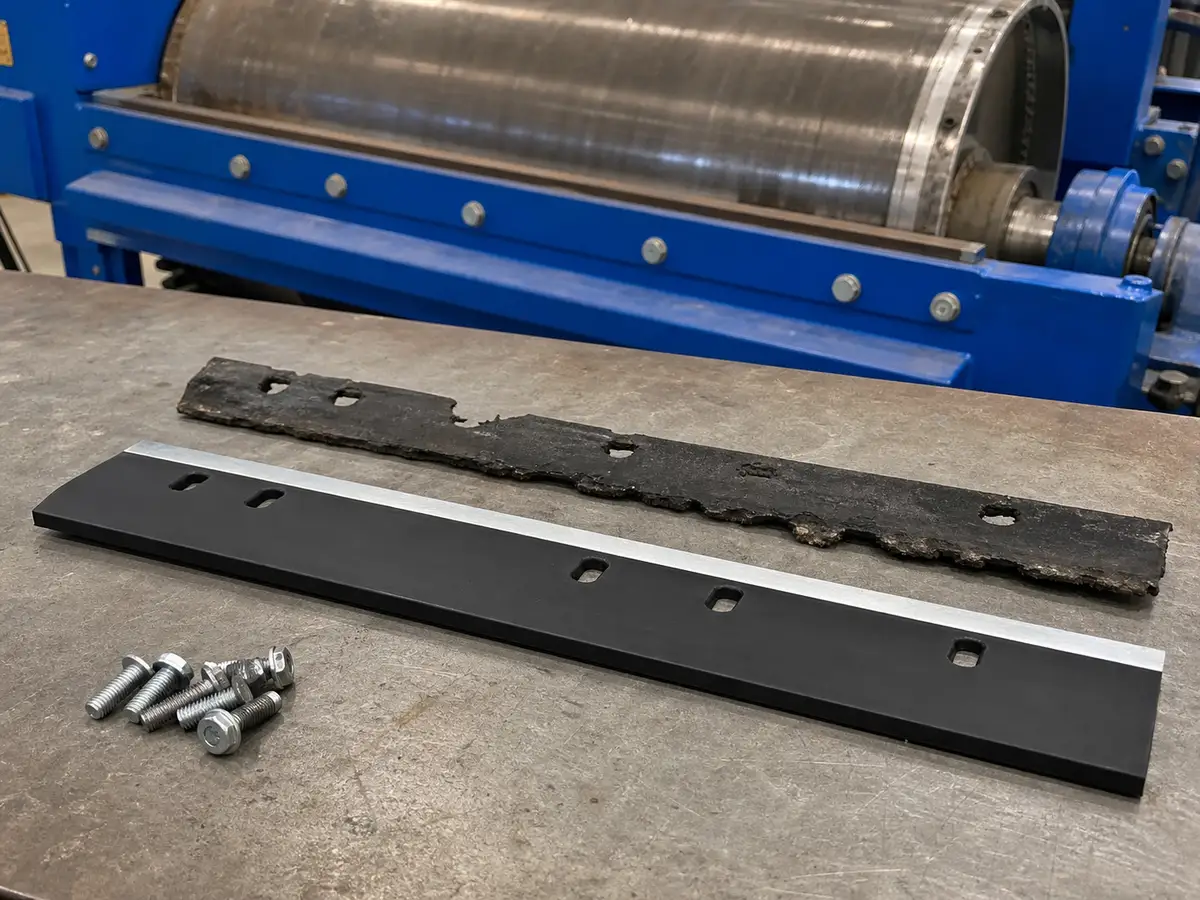
- Equipment identification, serial or project number, drawing revision, and operating hours
- Clear photographs and videos taken from a safe location
- When the problem began and what changed immediately before it
- Material, particle size, moisture, temperature, flow, belt speed, and burden
- Target contamination and missed/captured samples
- Measurements, instrument, alarms, maintenance, adjustments, and replaced parts
Change One Variable at a Time
Record the starting condition, hypothesis, approved change, result, and decision. Multiple simultaneous adjustments destroy the evidence needed to find the root cause and may move the equipment outside the approved configuration.
Troubleshoot by Symptom, Process Change, and Evidence
| Decision rule | Separate material or feed changes from magnetic, mechanical, installation and cleaning causes before changing the separator. |
|---|---|
| Inputs to confirm | Symptom and start time, material batch, throughput, layer depth, speed, gap, target, cleaning status, field readings, drive condition and recent maintenance. |
| Risk or limitation | Increasing magnetic strength cannot correct blocked discharge, wrong rotation, excessive burden, target non-liberation or an analytical sampling error. |
| Buyer action | Restore a known baseline, change one condition at a time and document the result before modifying hardware or settings. |
Safety Boundary Before Installation, Cleaning or Maintenance
- Before opening guards or approaching the drum, splitter, drive or discharge zone, isolate and lock out all connected feeds and drives and verify zero mechanical energy. The permanent magnetic field remains active. Keep tools and loose steel controlled and address drum, belt, chain, scraper and splitter pinch points as fitted.
- People with pacemakers or magnetically sensitive medical devices must follow medical-device and site restrictions; protect sensitive electronics and magnetic media.
- Our guidance is not a complete safe-work procedure. Approved manufacturer instructions, the site risk assessment, guarding and lifting plans, and lockout/tagout rules govern the work.
What We Need to Configure This Project
Input set for Magnetic Separator Troubleshooting Guide
- How we use your data: We compare your material, contamination risk, production target and line interface before we configure a proposal or rule out an unsuitable option.
- Material: name and composition; dry or wet; powder, granule, lump, fibre or slurry; minimum, maximum and typical particle distribution; moisture, stickiness, tendency to cake or bridge, abrasiveness, corrosiveness, bulk density, normal temperature and maximum temperature.
- Production and target: normal and peak throughput, continuous or batch feed, feed uniformity, contaminant or recovery target, magnetic response if known, typical and maximum target size, initial concentration, acceptable residual and whether product loss is permitted.
- Installation: feed chute and discharge geometry, drum or pulley diameter and working width, shaft/bearing interface, speed, splitter space, drive arrangement and maintenance access; cleaning method, permitted shutdown, contact-material, wear and corrosion requirements; indoor, outdoor, washdown, high-humidity, dusty or hazardous-area conditions.
- Supporting project files: drive voltage, frequency, phase and control interface; state whether any pneumatic actuator or air service is required; destination country; current drawings, site photographs, running video and a representative material/contaminant sample when testing is needed.
- What you receive next: We use the confirmed inputs to prepare a project-specific drawing and inspection plan. We do not treat performance as confirmed until the agreed design and any required representative test or site acceptance establish the result.
Project Support
Need help selecting the right magnetic solution?
Send us your material, flow condition, target metal, capacity, installation space and any drawings or site photos. We will review the application and recommend the next practical step.
Frequently Asked Questions
Why is “Stop Before Diagnosing If Unsafe” important for this decision?
Stop and isolate the equipment if guards are missing, structures or suspensions move, belts contact frames, bearings seize or overheat, electrical faults occur, material plugs dangerously, rotating parts are exposed, or captured metal can strike personnel.
Why is “Powder Plugs or Bridges” important for this decision?
Check moisture, oil, temperature, compaction, static, tube spacing, rows, chute angle, feed surge, and product buildup.
Why is “Overband Belt Tracking Problems” important for this decision?
Check frame and roller alignment, equal tension, buildup, trapped wire, joint condition, roller rotation, uneven captured load, and structural distortion.