OSENC Magnetic Separation
Condition-Based Inspection Framework
A useful maintenance plan separates magnetic condition, mechanical condition, process performance, cleaning, and safety controls. Set intervals from equipment instructions, operating hours, contamination load, environment, consequence of failure, and inspection history—not from one generic monthly checklist.
Request Product-Specific Documents Review troubleshooting guidance
Build the Asset Record First
- Equipment name, location, project/serial identification, and approved drawing revision
- Product type, magnetic circuit, drive, belt, bearings, seals, liners, and sensors
- Material, capacity, speed, burden or flow, temperature, moisture, dust, and corrosion
- Critical safety controls, isolation points, guards, lifting points, and access
- Baseline measurements, photographs, commissioning result, and spare-parts list
Operator Observation
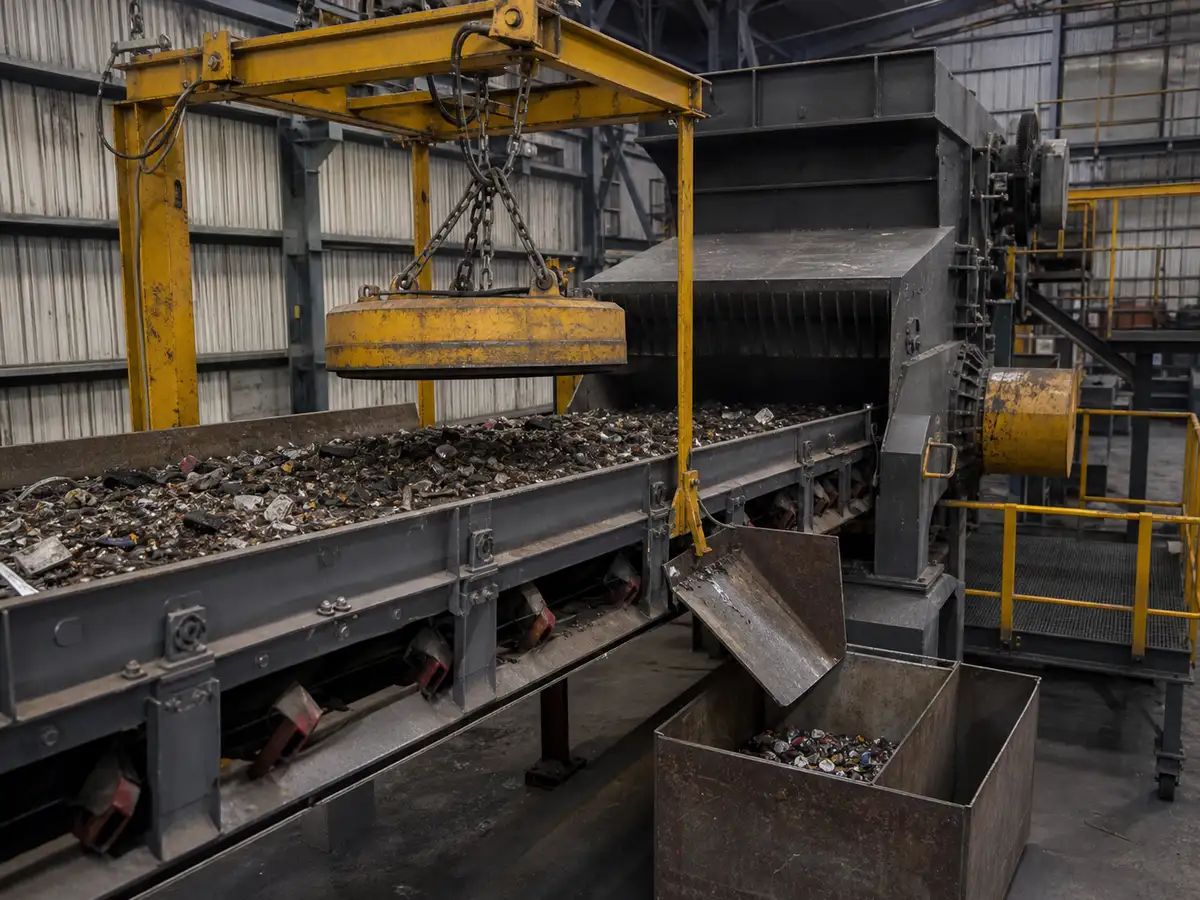
During normal operation, observe only from safe guarded positions. Record abnormal noise, vibration, smell, heat indication, belt tracking, buildup, plugging, leaks, loose guards, iron carryback, mixed discharge, or a change in captured contamination. A short consistent observation can identify developing faults before scheduled shutdown.
Maintenance by Product Type
| Product | Priority checks |
|---|---|
| Manual suspended magnet | Suspension, support, face buildup, damage, height, clearance, cleaning record |
| Self-cleaning overband | Cleaning belt, joint, cleats, tracking, tension, rollers, bearings, drive, discharge |
| Head pulley | Belt tracking, lagging, bearings, shaft/coupling, guards, buildup, splitter and chutes |
| Housed drum | Feed distribution, shell, drive, bearings, seals, liners, splitter, outlets and access doors |
| Tube or grate | Surface, welds, ends, frame, seals, mounting, buildup, cleaning and magnetic baseline |
| Drawer magnet | Tubes, housing, seals, pull-out mechanism, retainers, inlet/outlet and pressure boundary |
Magnetic Performance Check
Permanent magnets normally require no excitation power, but damage, overheating, corrosion, internal movement, an excessive working gap, or buildup can affect useful performance. Use a repeatable approved measurement or representative process test. Record instrument, position, orientation, temperature, target, gap, and baseline; do not trend unrelated maximum readings.
Mechanical and Safety Check
- Supports, suspension, welds, fasteners, guards, interlocks, labels, and access
- Shafts, couplings, bearings, rollers, belts, joints, cleats, and tensioning devices
- Drive current or condition, gearbox, lubricant, seals, and cooling as applicable
- Chutes, splitters, liners, scrapers, collection bins, and trapped material
- Electrical cables, sensors, grounding, control cabinet, and emergency devices where fitted
How to Set Intervals
- Start with the product and component manufacturer instructions.
- Increase attention for continuous duty, high iron load, abrasion, heat, moisture, corrosion, or safety consequence.
- Use early inspections to measure deterioration and contamination load.
- Shorten intervals when change accelerates; extend only with documented evidence and approval.
- Trigger an additional inspection after jams, impact, overload, maintenance, process changes, or abnormal contamination.
Spare Parts and Obsolescence
Identify belts, joints, cleats, bearings, rollers, seals, liners, scrapers, sensors, motor/gearbox data, fasteners, and special tools from the actual BOM. Record storage conditions and compatibility. A visually similar belt or bearing may differ in material, rating, dimensions, or hazardous-area suitability.
Maintenance Record Minimum
Record date, operating hours, process condition, isolation, findings, measurements and instruments, photographs, captured contamination, cleaning, lubricant, parts, adjustments, root cause, remaining risk, next due date, technician, reviewer, and restart authorization.
Use Trends, Not Check Marks Alone
Compare repeated measurements, photographs, belt position, bearing condition, captured load, cleaning interval, and product results. A checklist marked “OK” without a defined acceptance criterion does not demonstrate equipment condition.
Set Maintenance Frequency from Duty and Condition
| Decision rule | Use risk, operating hours, iron loading, wear and condition trends to set inspection intervals instead of applying one calendar schedule to every separator. |
|---|---|
| Inputs to confirm | Product-specific manual, critical parts, environment, hours, starts, iron load, cleaning records, belt or bearing condition, seals, fasteners and safety devices. |
| Risk or limitation | Permanent magnetic force remains during shutdown, and covers or guards must not be removed without isolation of every mechanical, electrical and process energy source. |
| Buyer action | Keep an equipment history with readings, photographs, replaced parts and next due actions and review the interval after abnormal wear or process change. |
Safety Boundary Before Installation, Cleaning or Maintenance
- Isolate and lock out every applicable electrical, pneumatic, hydraulic and mechanical energy source before inspection or maintenance. Permanent magnetic force can remain after power is removed. Control pinch points, attracted steel, sharp fragments, stored energy and lifting operations for the actual equipment configuration.
- People with pacemakers or magnetically sensitive medical devices must follow medical-device and site restrictions; protect sensitive electronics and magnetic media.
- Our guidance is not a complete safe-work procedure. Approved manufacturer instructions, the site risk assessment, guarding and lifting plans, and lockout/tagout rules govern the work.
What We Need to Configure This Project
Input set for Magnetic Separator Preventive Maintenance Checklist
- How we use your data: We compare your material, contamination risk, production target and line interface before we configure a proposal or rule out an unsuitable option.
- Material: name and composition; dry or wet; powder, granule, lump, fibre or slurry; minimum, maximum and typical particle distribution; moisture, stickiness, tendency to cake or bridge, abrasiveness, corrosiveness, bulk density, normal temperature and maximum temperature.
- Production and target: normal and peak throughput, continuous or batch feed, feed uniformity, contaminant or recovery target, magnetic response if known, typical and maximum target size, initial concentration, acceptable residual and whether product loss is permitted.
- Installation: installation position, interface dimensions and standards, flow direction, available operating, cleaning, lifting and maintenance space; cleaning method, permitted shutdown, contact-material, wear and corrosion requirements; indoor, outdoor, washdown, high-humidity, dusty or hazardous-area conditions.
- Supporting project files: power supply, voltage, frequency, phase, controls, air supply and pressure where applicable; destination country; current drawings, site photographs, running video and a representative material/contaminant sample when testing is needed.
- What you receive next: We use the confirmed inputs to prepare a project-specific drawing and inspection plan. We do not treat performance as confirmed until the agreed design and any required representative test or site acceptance establish the result.
Project Support
Need help selecting the right magnetic solution?
Send us your material, flow condition, target metal, capacity, installation space and any drawings or site photos. We will review the application and recommend the next practical step.
Frequently Asked Questions
Why is “Operator Observation” important for this decision?
During normal operation, observe only from safe guarded positions. Record abnormal noise, vibration, smell, heat indication, belt tracking, buildup, plugging, leaks, loose guards, iron carryback, mixed discharge, or a change in captured contamination.
Why is “Magnetic Performance Check” important for this decision?
Permanent magnets normally require no excitation power, but damage, overheating, corrosion, internal movement, an excessive working gap, or buildup can affect useful performance.
Why is “Spare Parts and Obsolescence” important for this decision?
Identify belts, joints, cleats, bearings, rollers, seals, liners, scrapers, sensors, motor/gearbox data, fasteners, and special tools from the actual BOM.