OSENC Magnetic Separation
Cleaning Belt, Drive and Discharge
Maintain a self-cleaning overband by trending belt tracking, tension, splice or joint condition, cleats, rollers, bearings, drive, fasteners, guards, magnetic-face buildup, and iron discharge. Use the supplied manual for limits and adjustment sequence; repeated tracking correction without finding the cause can damage the belt and hide frame, roller, loading, or contamination problems.
Request Unit-Specific Maintenance Information Review the Product Page
Daily or Shift Observation
- Observe tracking from a guarded safe position.
- Listen for new scraping, impact, bearing, or drive noise.
- Confirm captured iron clears the magnet and reaches the intended collection point.
- Check for buildup, wrapped wire, damaged cleats, loose guards, and oil leakage.
- Record any change in iron type or quantity.
Why the Belt Runs Off Center
| Possible cause | Evidence to check | Action boundary |
|---|---|---|
| Unequal tension or adjustment | Position and measurement at both sides | Follow the unit’s adjustment sequence |
| Roller or frame misalignment | Square, level, parallelism, looseness | Correct the root geometry before repeated tracking changes |
| Buildup or trapped wire | Deposits on rollers, underside, edges, and return path | Isolate and clean safely |
| Damaged belt or joint | Stretch, edge wear, separation, deformation | Assess repair or replacement |
| Uneven iron loading | Discharge pattern and accumulation | Review product flow and magnet position |
Safe Inspection Sequence
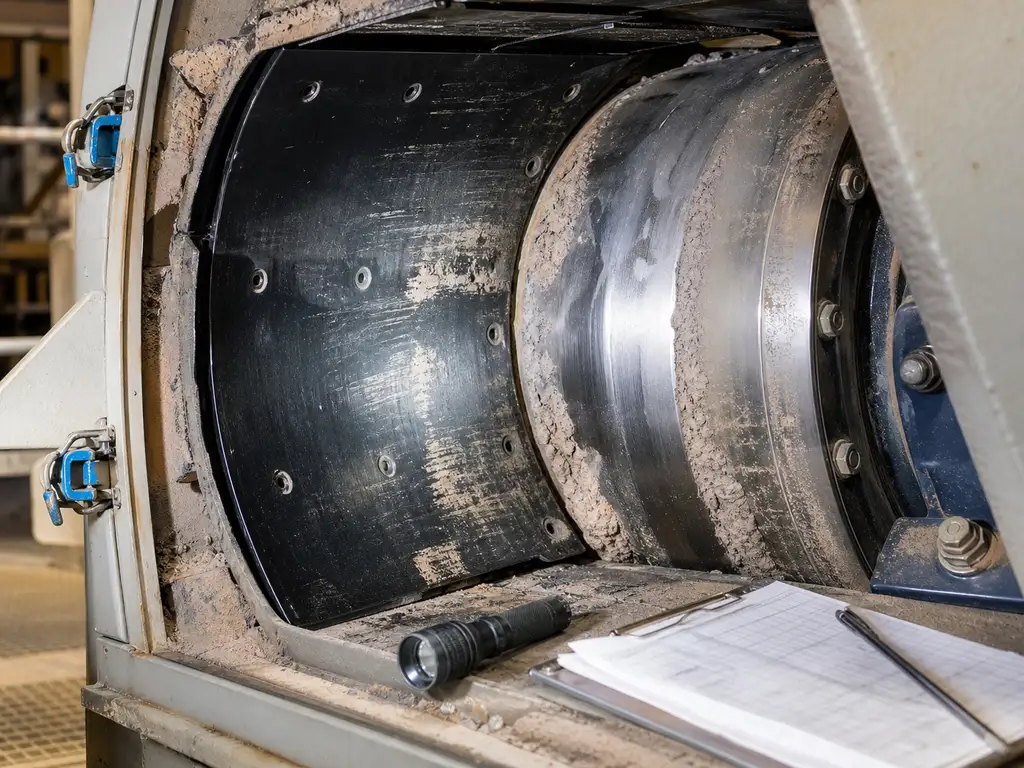
- Stop, isolate, lock out, verify zero energy, and control magnetic hazards under the site procedure.
- Remove loose steel tools and control access.
- Inspect the full belt path, joint, cleats, edges, rollers, bearings, tensioner, drive, guards, and fasteners.
- Remove buildup and wrapped material using the approved method.
- Measure or set only the items defined in the product manual.
- Replace guards, clear personnel and tools, then perform a controlled restart.
Do Not Guess Belt Tension
Too little tension can cause slip, poor discharge, flap, and tracking instability. Too much can overload bearings, shafts, belt joints, and the drive. Use the supplied tensioning method and reference marks or measurements. A universal tension value is not appropriate for different belt constructions and sizes; use the supplied adjustment method and equipment-specific limits.
Bearings, Gearbox and Motor
Use the actual manufacturer instructions for lubricant type, quantity, interval, mounting, ventilation, current, temperature, and replacement. Mixing incompatible grease, overgreasing, blocking cooling, or ignoring seal damage may shorten life. Trend temperature and noise against the same load and ambient conditions rather than relying on one isolated reading.
Magnetic and Discharge Checks
Inspect for an excessive layer of retained fines or iron on the magnetic face and for objects too large or long for the discharge route. Confirm the cleaning belt removes material before it reaches the return path and that the collection bin cannot overflow into the product or belt.
Recommended Records
- Operating hours and start/stop events
- Tracking position and adjustments
- Belt, joint, cleat, roller, bearing, and drive condition
- Lubrication product and quantity where applicable
- Captured iron type and approximate load
- Photographs, parts changed, root cause, and restart approval
When to Stop the Unit
Stop and investigate if the belt contacts the frame, the joint separates, reinforcement is exposed, a roller or bearing seizes, guards are missing, the drive overheats, fasteners loosen repeatedly, abnormal vibration develops, or iron cannot discharge safely.
Maintenance Records That Prevent Repeat Failures
| Decision rule | Trend belt tracking, tension position, cleat and joint condition, pulley buildup, bearings, gearbox, guards and iron discharge instead of waiting for belt failure. |
|---|---|
| Inputs to confirm | Operating hours, iron loading, cleaning area, belt and drive specification, lubrication instruction, tension reference and observed temperature or vibration. |
| Risk or limitation | Stop and isolate for abnormal tracking, damaged joint or cleat, exposed reinforcement, bearing noise, blocked discharge or contact between moving and fixed parts. |
| Buyer action | Use a dated checklist with photographs and corrective action so gradual changes can be separated from installation or material problems. |
What We Need to Configure This Project
Input set for Self-Cleaning Overband Magnet Maintenance Guide
- How we use your data: We compare your material, contamination risk, production target and line interface before we configure a proposal or rule out an unsuitable option.
- Material: name and composition; dry or wet; powder, granule, lump, fibre or slurry; minimum, maximum and typical particle distribution; moisture, stickiness, tendency to cake or bridge, abrasiveness, corrosiveness, bulk density, normal temperature and maximum temperature.
- Production and target: normal and peak throughput, continuous or batch feed, feed uniformity, contaminant or recovery target, magnetic response if known, typical and maximum target size, initial concentration, acceptable residual and whether product loss is permitted.
- Installation: belt width and speed, normal and maximum burden depth, magnet position and rated working distance, available suspension and maintenance space, support and lifting arrangement; cleaning method, permitted shutdown, contact-material, wear and corrosion requirements; indoor, outdoor, washdown, high-humidity, dusty or hazardous-area conditions.
- Supporting project files: drive voltage, frequency and phase where a self-cleaning unit is considered; control interface and any site air requirement; destination country; current drawings, site photographs, running video and a representative material/contaminant sample when testing is needed.
- What you receive next: We use the confirmed inputs to prepare a project-specific drawing and inspection plan. We do not treat performance as confirmed until the agreed design and any required representative test or site acceptance establish the result.
Project Support
Need help selecting the right magnetic solution?
Send us your material, flow condition, target metal, capacity, installation space and any drawings or site photos. We will review the application and recommend the next practical step.
Frequently Asked Questions
Do Not Guess Belt Tension?
Too little tension can cause slip, poor discharge, flap, and tracking instability. Too much can overload bearings, shafts, belt joints, and the drive.
Why is “Bearings, Gearbox and Motor” important for this decision?
Use the actual manufacturer instructions for lubricant type, quantity, interval, mounting, ventilation, current, temperature, and replacement.
Why is “Magnetic and Discharge Checks” important for this decision?
Inspect for an excessive layer of retained fines or iron on the magnetic face and for objects too large or long for the discharge route.