OSENC Magnetic Separation
Choose the Installation Direction
Choose a crossbelt overband when side discharge and an accessible position above the carrying run fit the plant. Choose an inline arrangement near the head pulley when the opening material trajectory can reduce burial and there is room for forward discharge. Neither is automatically stronger: compare the real magnet-to-iron distance, burden, surrounding steel, iron travel path, headroom, and maintenance access.

Core Difference
| Factor | Crossbelt | Inline |
|---|---|---|
| Magnet direction | Cleaning belt normally crosses the product conveyor | Cleaning belt normally follows the product-conveyor direction |
| Iron discharge | To one side | Beyond or near the head-discharge region |
| Typical position | Above a straight carrying section | Near the conveyor head pulley |
| Material condition | Iron must lift through and across the burden | Burden may open as material leaves the head |
| Space priority | Side clearance and collection | Headroom, forward clearance, and chute geometry |
Choose Crossbelt When
- A suitable straight conveyor position gives acceptable working distance.
- There is safe side-discharge space and a controlled collection point.
- The head area is crowded or its trajectory cannot be modified.
- Support, access, lifting, and belt removal are practical at the selected position.
Choose Inline When
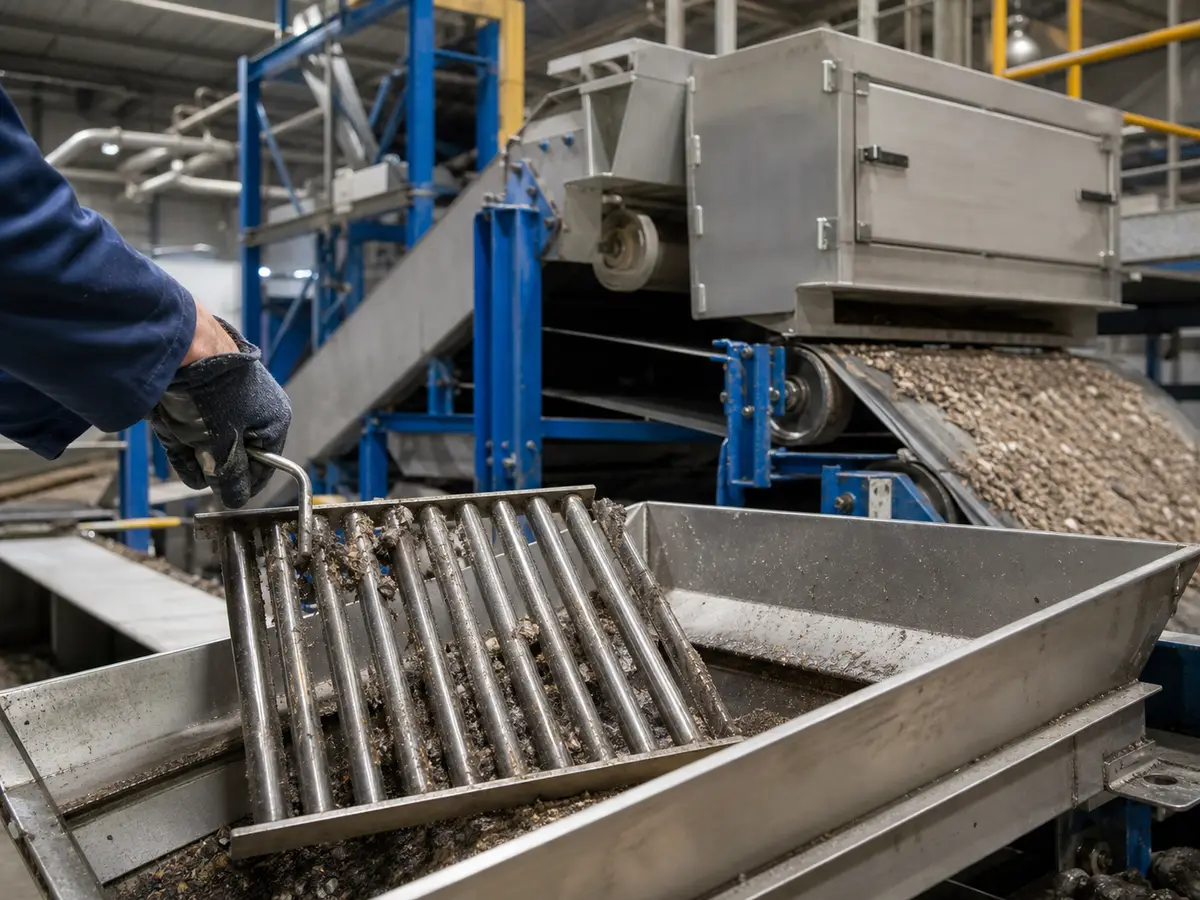
- The head-pulley region provides a favorable, opening material trajectory.
- Forward iron discharge can be separated from the product chute.
- Conveyor steel, pulley, head structure, guards, and chutes can be reviewed together.
- Maintenance and belt-change space remain accessible.
Working Distance Can Reverse the Choice
A theoretically favorable direction may perform worse if structural clearance forces the magnet higher. Measure from the specified magnet datum to the target iron position at normal and peak burden. Compare the full geometry, not the empty belt or nominal suspension height alone.
Iron Must Have a Safe Exit
Draw the expected path of bolts, wire, plate, and larger objects from attraction through discharge. Check cleats, guards, chutes, platforms, wind, nearby steel, and collection-bin capacity. Long wire may behave differently from compact iron even at similar mass.
Maintenance and Structural Questions
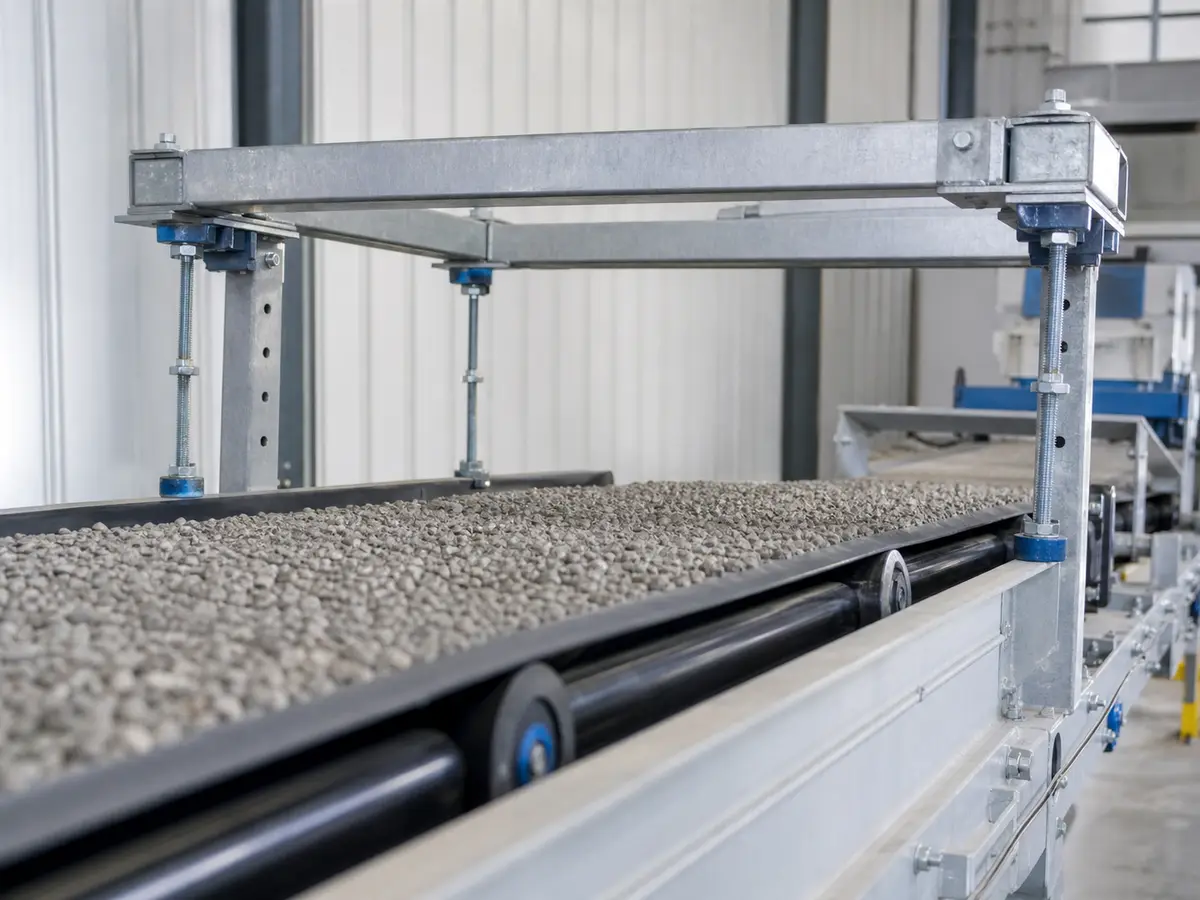
- Can the cleaning belt, rollers, bearings, and drive be reached safely?
- Can the complete magnet be lifted or removed?
- Does the support resist equipment and operating loads?
- Can captured iron strike the structure or personnel?
- Can the selected orientation be guarded without blocking inspection?
Decision Data
Send plan and elevation drawings, belt width, trough, speed, normal/peak burden, head-pulley diameter, material trajectory, target iron, surrounding steel, headroom, side clearance, collection position, environmental conditions, power, and operating schedule.
Select Orientation from Trajectory and Discharge
| Decision rule | Use inline placement where the opening head-pulley trajectory reduces burden depth; use crossbelt where side discharge and the available structure provide a cleaner captured-iron path. |
|---|---|
| Inputs to confirm | Material name, dry or wet condition, lump-size range, bulk density and moisture; trajectory, belt width and speed, burden at the location, target size, magnet height, discharge side, bin position, structure and maintenance clearance. |
| Risk or limitation | Inline placement can conflict with pulley and chute geometry, while crossbelt placement can require greater suspension height and lateral clearance. |
| Buyer action | Review a dimensioned conveyor section and trace both product and iron trajectories before choosing orientation. |
What We Need to Configure This Project
Input set for Inline vs Crossbelt Overband Magnet: Which Layout Fits the Conveyor?
- How we use your data: We compare your material, contamination risk, production target and line interface before we configure a proposal or rule out an unsuitable option.
- Material: name and composition; dry or wet; powder, granule, lump, fibre or slurry; minimum, maximum and typical particle distribution; moisture, stickiness, tendency to cake or bridge, abrasiveness, corrosiveness, bulk density, normal temperature and maximum temperature.
- Production and target: normal and peak throughput, continuous or batch feed, feed uniformity, contaminant or recovery target, magnetic response if known, typical and maximum target size, initial concentration, acceptable residual and whether product loss is permitted.
- Installation: belt width and speed, normal and maximum burden depth, magnet position and rated working distance, available suspension and maintenance space, support and lifting arrangement; cleaning method, permitted shutdown, contact-material, wear and corrosion requirements; indoor, outdoor, washdown, high-humidity, dusty or hazardous-area conditions.
- Supporting project files: drive voltage, frequency and phase where a self-cleaning unit is considered; control interface and any site air requirement; destination country; current drawings, site photographs, running video and a representative material/contaminant sample when testing is needed.
- What you receive next: We use the confirmed inputs to prepare a project-specific drawing and inspection plan. We do not treat performance as confirmed until the agreed design and any required representative test or site acceptance establish the result.
Project Support
Need help selecting the right magnetic solution?
Send us your material, flow condition, target metal, capacity, installation space and any drawings or site photos. We will review the application and recommend the next practical step.
Frequently Asked Questions
Why is “Working Distance Can Reverse the Choice” important for this decision?
A theoretically favorable direction may perform worse if structural clearance forces the magnet higher. Measure from the specified magnet datum to the target iron position at normal and peak burden.
Why is “Iron Must Have a Safe Exit” important for this decision?
Draw the expected path of bolts, wire, plate, and larger objects from attraction through discharge. Check cleats, guards, chutes, platforms, wind, nearby steel, and collection-bin capacity.
Why is “Decision Data” important for this decision?
Send plan and elevation drawings, belt width, trough, speed, normal/peak burden, head-pulley diameter, material trajectory, target iron, surrounding steel, headroom, side clearance, collection position, environmental conditions, power, and operating schedule.