OSENC Magnetic Separation
Balance Magnetic Exposure Against Flow Restriction
Use one row when headroom is limited, the material needs a more open path, or one well-positioned contact stage meets the verified objective. Add staggered rows when additional magnetic exposure is needed and the product remains free-flowing through the tighter, deeper assembly. More rows do not guarantee better results if they cause bridging, buildup, breakage, or unstable feed.
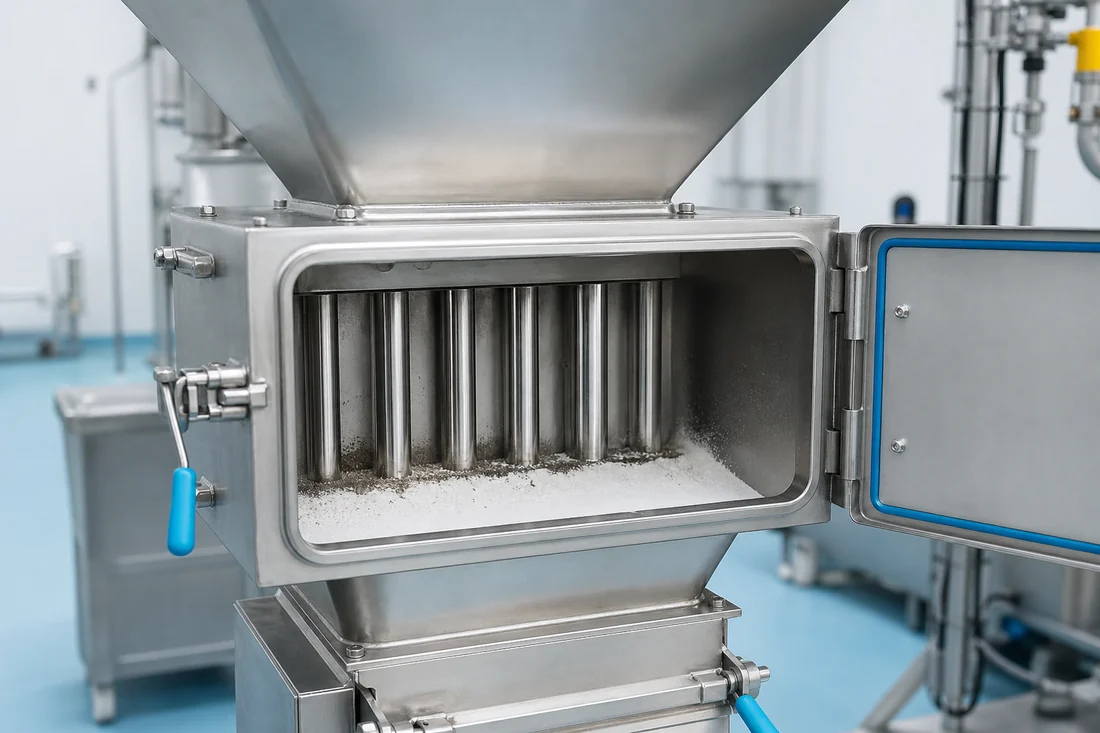
What Another Row Changes
| Factor | Single row | Two or more rows |
|---|---|---|
| Exposure opportunities | One passage across tube pattern | Additional staggered contact zones |
| Headroom | Lower assembly depth | Greater vertical space |
| Flow resistance | Generally more open | Potentially more restriction and buildup |
| Cleaning | Fewer surfaces | More tubes and trapped product to inspect |
| Weight and cost | Lower, all else equal | Higher frame, tube, handling and cleaning scope |
Single Row May Be Better When
- The product is coarse, fragile, cohesive, oily, damp, or prone to bridging.
- Available height and pull-out space are limited.
- The control point is primarily for larger exposed responsive pieces.
- Frequent access and simple cleaning are priorities.
- Testing shows the required result without another row.
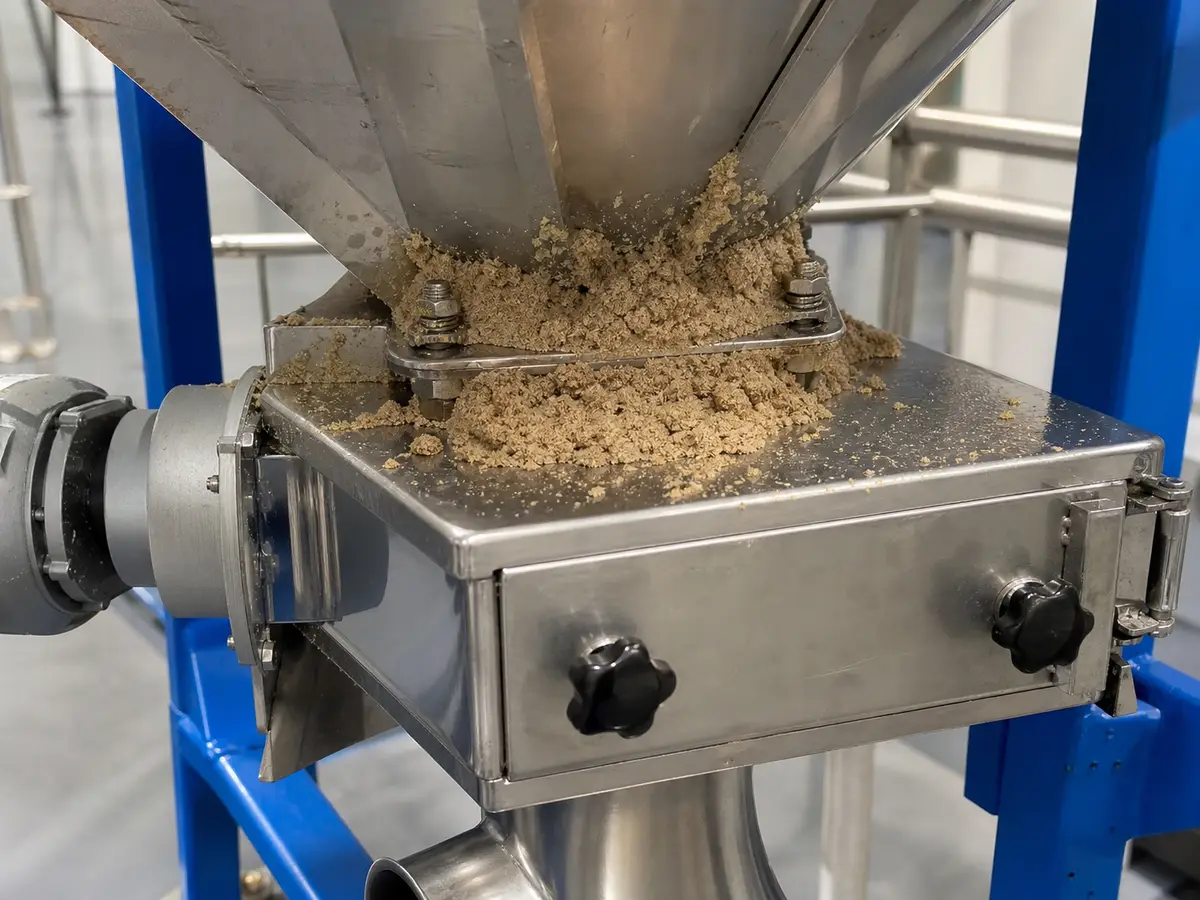
Multiple Rows May Be Better When
- The dry, free-flowing material can pass through staggered tubes consistently.
- Fine exposed ferrous contamination needs more opportunities to approach a surface.
- Headroom, structural support, and cleaning access are available.
- The added row improves a documented result under representative testing.
Tube Spacing and Stagger Matter
Rows should be viewed with tube diameter, center distance, offset, opening, wall clearance, particle size, and feed distribution. A second row directly hidden behind the first may not create the same exposure as a staggered pattern. Review the magnetic tube spacing guide.
Check Peak Flow, Not Only Average Flow
Surges can compact powder and bridge a grate that passes the average rate. State mass and volumetric flow, bulk density, moisture, temperature, chute angle, and whether the product aerates or compacts. Capacity claims without these conditions are not comparable.
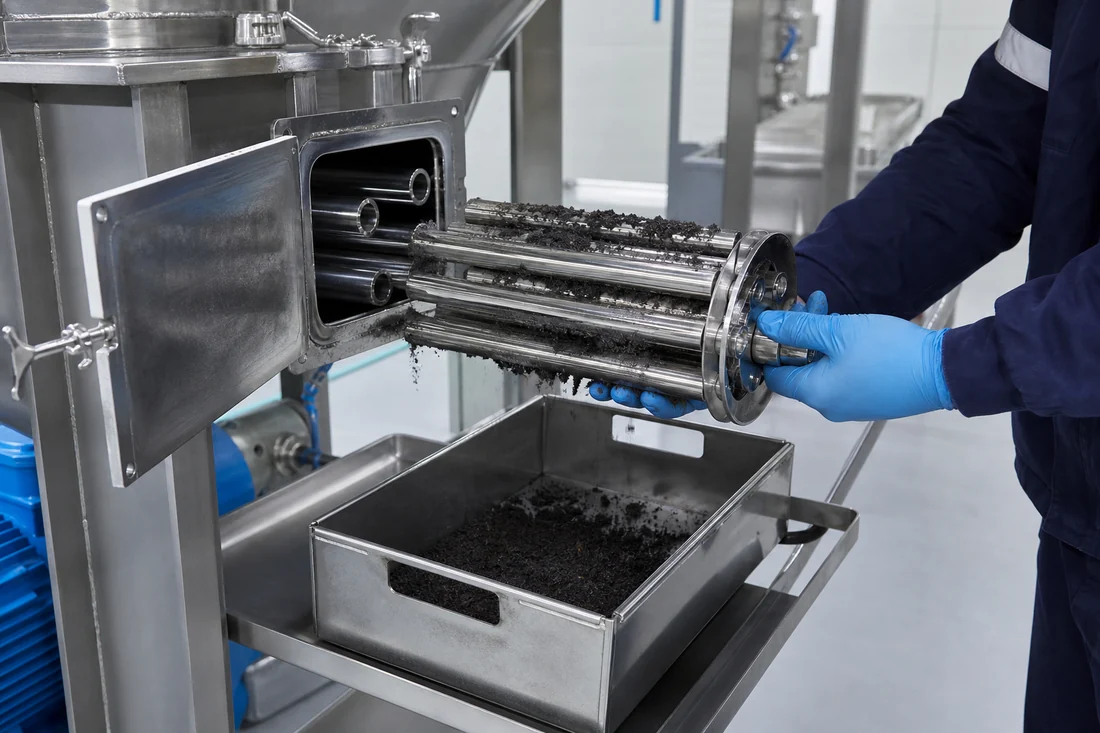
Cleaning and Inspection Load
Each added tube increases collection surface and inspection work. Confirm the assembly can be removed safely, all rows are visible, captured material can be contained, and the grate can be reinstalled in the correct orientation. If cleaning frequency is high, compare an easy-clean structure rather than adding rows without considering labor.
Use a Trial for Difficult Powder
Record feed mass, rate, moisture, row arrangement, tube spacing, buildup, pressure or flow effect, captured fraction, downstream contamination, and repeatability. Evaluate product flow and magnetic result together.
Add Rows Only When They Improve the Real Flow Path
| Decision rule | Use additional rows when staggered coverage and repeated contact improve capture without causing unacceptable restriction, bridging or cleaning burden. |
|---|---|
| Inputs to confirm | Particle size, flowability, target size and amount, opening, tube spacing, product head, peak rate, row offset and cleaning interval. |
| Risk or limitation | More rows can repeat the same ineffective path when feed is channelled and can increase retained product and pressure loss. |
| Buyer action | Review flow distribution and compare captured and missed targets for the proposed row layouts under the same feed condition. |
Engineering Conditions Behind the Recommendation
- A high surface reading does not by itself predict capture in flowing product.
- Field gradient, shell or sleeve thickness, spacing, distance from each particle to a pole, particle size and magnetic response, flow speed, product depth, bridging and contamination buildup all change the result.
- Mechanical passage capacity is not the same as effective separation capacity.
- Quote or test conditions must identify material, size distribution, moisture, bulk density, normal and peak rate, feed distribution, speed, layer or flow geometry, contamination loading and cleaning interval.
What We Need to Configure This Project
Input set for Single-Row vs Multi-Row Magnetic Grate: How Many Rows Do You Need?
- How we use your data: We compare your material, contamination risk, production target and line interface before we configure a proposal or rule out an unsuitable option.
- Material: name and composition; dry or wet; powder, granule, lump, fibre or slurry; minimum, maximum and typical particle distribution; moisture, stickiness, tendency to cake or bridge, abrasiveness, corrosiveness, bulk density, normal temperature and maximum temperature.
- Production and target: normal and peak throughput, continuous or batch feed, feed uniformity, contaminant or recovery target, magnetic response if known, typical and maximum target size, initial concentration, acceptable residual and whether product loss is permitted.
- Installation: hopper, chute or pipeline location, opening or flange dimensions and standard, flow direction, product head, extraction and cleaning space, upstream and downstream connections; cleaning method, permitted shutdown, contact-material, wear and corrosion requirements; indoor, outdoor, washdown, high-humidity, dusty or hazardous-area conditions.
- Supporting project files: power and control data for any actuator or automated cleaning option, plus available air supply and pressure where applicable; destination country; current drawings, site photographs, running video and a representative material/contaminant sample when testing is needed.
- What you receive next: We use the confirmed inputs to prepare a project-specific drawing and inspection plan. We do not treat performance as confirmed until the agreed design and any required representative test or site acceptance establish the result.
Project Support
Need help selecting the right magnetic solution?
Send us your material, flow condition, target metal, capacity, installation space and any drawings or site photos. We will review the application and recommend the next practical step.
Frequently Asked Questions
Why is “Tube Spacing and Stagger Matter” important for this decision?
Rows should be viewed with tube diameter, center distance, offset, opening, wall clearance, particle size, and feed distribution.
Why is “Check Peak Flow, Not Only Average Flow” important for this decision?
Surges can compact powder and bridge a grate that passes the average rate. State mass and volumetric flow, bulk density, moisture, temperature, chute angle, and whether the product aerates or compacts.
Why is “Cleaning and Inspection Load” important for this decision?
Each added tube increases collection surface and inspection work. Confirm the assembly can be removed safely, all rows are visible, captured material can be contained, and the grate can be reinstalled in the correct orientation.