OSENC Magnetic Separation
Scrape the Tubes or Withdraw the Magnetic Cores
Choose a standard grate when captured iron is light enough to remove safely from the tube surfaces and the simplest construction is preferred. Choose an easy-clean grate when frequent or strongly retained contamination makes manual scraping slow or inconsistent and there is enough space to withdraw the magnetic cores. Compare field at the actual collection surface, not just the internal magnet core.
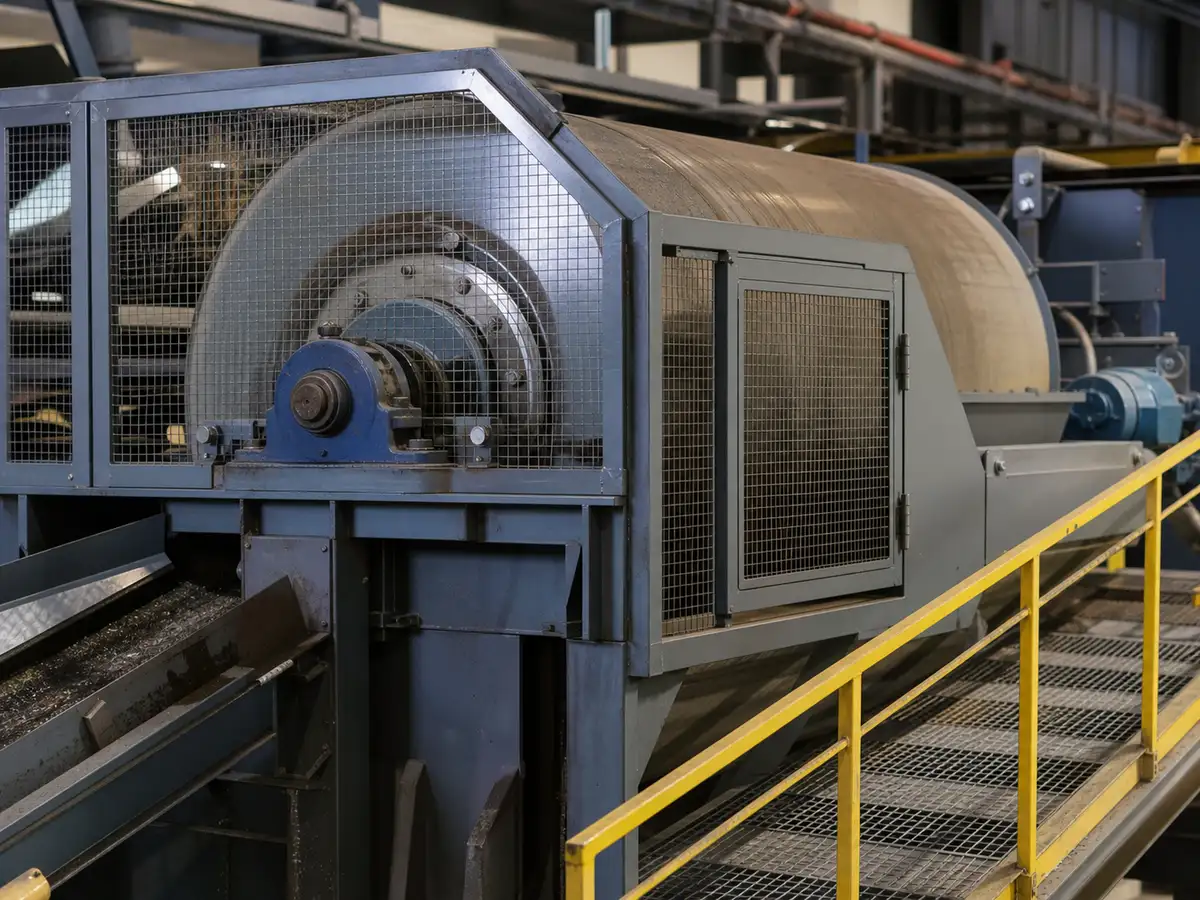
Core Difference
| Factor | Standard grate | Easy-clean grate |
|---|---|---|
| Collection surface | Outer surface of magnetic tube | Removable outer sleeve around a magnetic core |
| Cleaning | Captured iron is wiped or scraped away | Core is withdrawn so iron releases from sleeve |
| Construction | Fewer moving/separable parts | Core, sleeve, guides, retainers and withdrawal sequence |
| Space | Enough to remove and clean the grate | Additional core withdrawal and handling space |
| Magnetic gap | Determined by tube wall and construction | Also includes collection sleeve and internal clearances |
Choose Standard Manual-Clean When
- Contamination load and cleaning frequency are low or moderate.
- Operators can remove captured iron safely and consistently.
- The application favors simple construction and fewer separable parts.
- Available installation space does not permit long core withdrawal.
Choose Easy-Clean When
- Cleaning occurs frequently and is a measurable downtime or ergonomic problem.
- Fine iron strongly coats the collection surface.
- There is controlled space to support and withdraw the cores.
- The sleeve, seals, guides, and retention can meet material-contact and cleaning requirements.
Verify Performance at the Working Surface
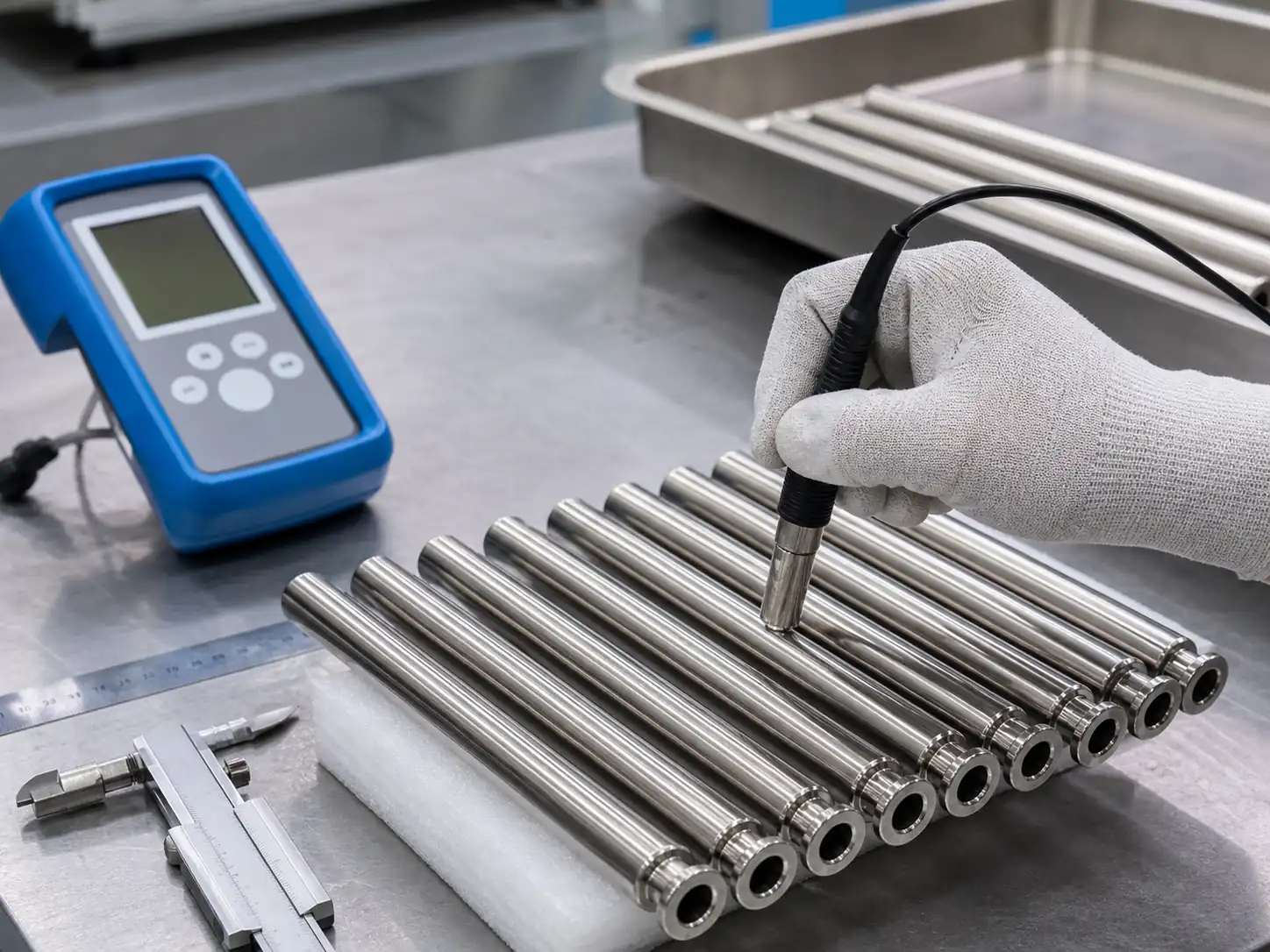
The extra sleeve and clearance create a gap between the magnetic core and captured particle. Request magnetic measurements on the external collection surface with the complete assembly in operating position. Do not compare an exposed core reading with a complete easy-clean tube or a standard tube measured differently.
Cleaning Time Is Not the Only Cost
Include operator time, isolation, handling, captured-material containment, sleeve wear, guide damage, seal inspection, replacement parts, cleaning validation, and risk of incorrect reassembly. A simpler grate may cost less initially; an easy-clean design may reduce repeated labor only when actual cleaning frequency supports it.
Material Flow and Hygiene
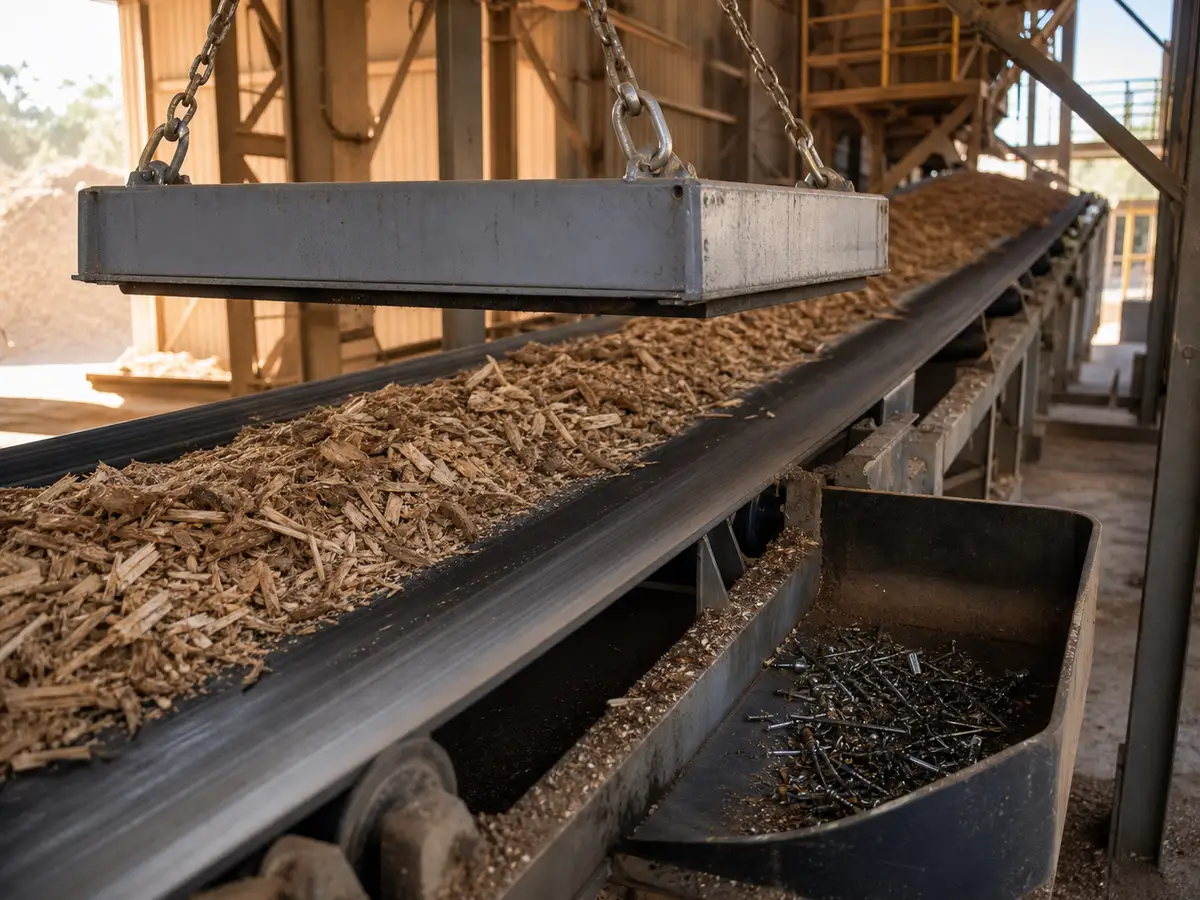
Both structures can bridge sticky or cohesive product if spacing is too tight. Easy-clean assemblies add interfaces that must be reviewed for product entrapment, wear, and cleanability. Food or hygienic suitability requires actual materials, finish, weld, seal, and cleaning evidence—not the easy-clean label.
Decision Worksheet
- Captured contamination type and quantity per cleaning
- Current cleaning duration and number of cleanings per day
- Operator method, safety issue, and disposal route
- Available grate and core withdrawal space
- Material, flow, temperature, contact and hygiene requirements
- Required magnetic test at the collection surface
- Expected sleeve, seal and spare-part plan
Compare Cleaning Duty with Magnetic Working Gap
| Decision rule | Choose easy-clean sleeves for frequent controlled release; choose a standard grate when direct tube exposure, simpler construction and manual wiping are acceptable. |
|---|---|
| Inputs to confirm | Material name, powder or granule size, bulk density, moisture, flowability and normal and peak rate; iron fines, rust, wire or equipment-wear fragments, their typical size and initial concentration, and the acceptable residual needed for product purity or downstream protection; cleaning interval, permitted downtime, operator access, opening, sleeve thickness, temperature, wear and available pull-out distance. |
| Risk or limitation | The sleeve adds distance from the magnetic core and can retain product; standard tubes can require more direct handling of captured sharp iron. |
| Buyer action | Compare field at the actual collection surface and time a safe complete cleaning cycle with the real contaminant. |
Safety Boundary Before Installation, Cleaning or Maintenance
- Stop and isolate product flow, pressure, actuators and connected machinery before withdrawing or cleaning magnetic elements. The magnetic field remains active outside the process. Prevent hand trapping between magnetic parts and steel, control attracted tools and sharp captured fragments, and contain removed contamination so that it cannot return to product.
- People with pacemakers or magnetically sensitive medical devices must follow medical-device and site restrictions; protect sensitive electronics and magnetic media.
- Our guidance is not a complete safe-work procedure. Approved manufacturer instructions, the site risk assessment, guarding and lifting plans, and lockout/tagout rules govern the work.
Engineering Conditions Behind the Recommendation
- A high surface reading does not by itself predict capture in flowing product.
- Field gradient, shell or sleeve thickness, spacing, distance from each particle to a pole, particle size and magnetic response, flow speed, product depth, bridging and contamination buildup all change the result.
- Mechanical passage capacity is not the same as effective separation capacity.
- Quote or test conditions must identify material, size distribution, moisture, bulk density, normal and peak rate, feed distribution, speed, layer or flow geometry, contamination loading and cleaning interval.
What We Need to Configure This Project
Input set for Standard vs Easy-Clean Magnetic Grate: When Is the Cleaning Mechanism Worth It?
- How we use your data: We compare your material, contamination risk, production target and line interface before we configure a proposal or rule out an unsuitable option.
- Material: name and composition; dry or wet; powder, granule, lump, fibre or slurry; minimum, maximum and typical particle distribution; moisture, stickiness, tendency to cake or bridge, abrasiveness, corrosiveness, bulk density, normal temperature and maximum temperature.
- Production and target: normal and peak throughput, continuous or batch feed, feed uniformity, contaminant or recovery target, magnetic response if known, typical and maximum target size, initial concentration, acceptable residual and whether product loss is permitted.
- Installation: hopper, chute or pipeline location, opening or flange dimensions and standard, flow direction, product head, extraction and cleaning space, upstream and downstream connections; cleaning method, permitted shutdown, contact-material, wear and corrosion requirements; indoor, outdoor, washdown, high-humidity, dusty or hazardous-area conditions.
- Supporting project files: power and control data for any actuator or automated cleaning option, plus available air supply and pressure where applicable; destination country; current drawings, site photographs, running video and a representative material/contaminant sample when testing is needed.
- What you receive next: We use the confirmed inputs to prepare a project-specific drawing and inspection plan. We do not treat performance as confirmed until the agreed design and any required representative test or site acceptance establish the result.
Project Support
Need help selecting the right magnetic solution?
Send us your material, flow condition, target metal, capacity, installation space and any drawings or site photos. We will review the application and recommend the next practical step.
Frequently Asked Questions
Why is “Verify Performance at the Working Surface” important for this decision?
The extra sleeve and clearance create a gap between the magnetic core and captured particle. Request magnetic measurements on the external collection surface with the complete assembly in operating position.
Why is “Cleaning Time Is Not the Only Cost” important for this decision?
Include operator time, isolation, handling, captured-material containment, sleeve wear, guide damage, seal inspection, replacement parts, cleaning validation, and risk of incorrect reassembly.
Why is “Material Flow and Hygiene” important for this decision?
Both structures can bridge sticky or cohesive product if spacing is too tight. Easy-clean assemblies add interfaces that must be reviewed for product entrapment, wear, and cleanability.