OSENC Magnetic Separation
Individual Element or Complete Frame
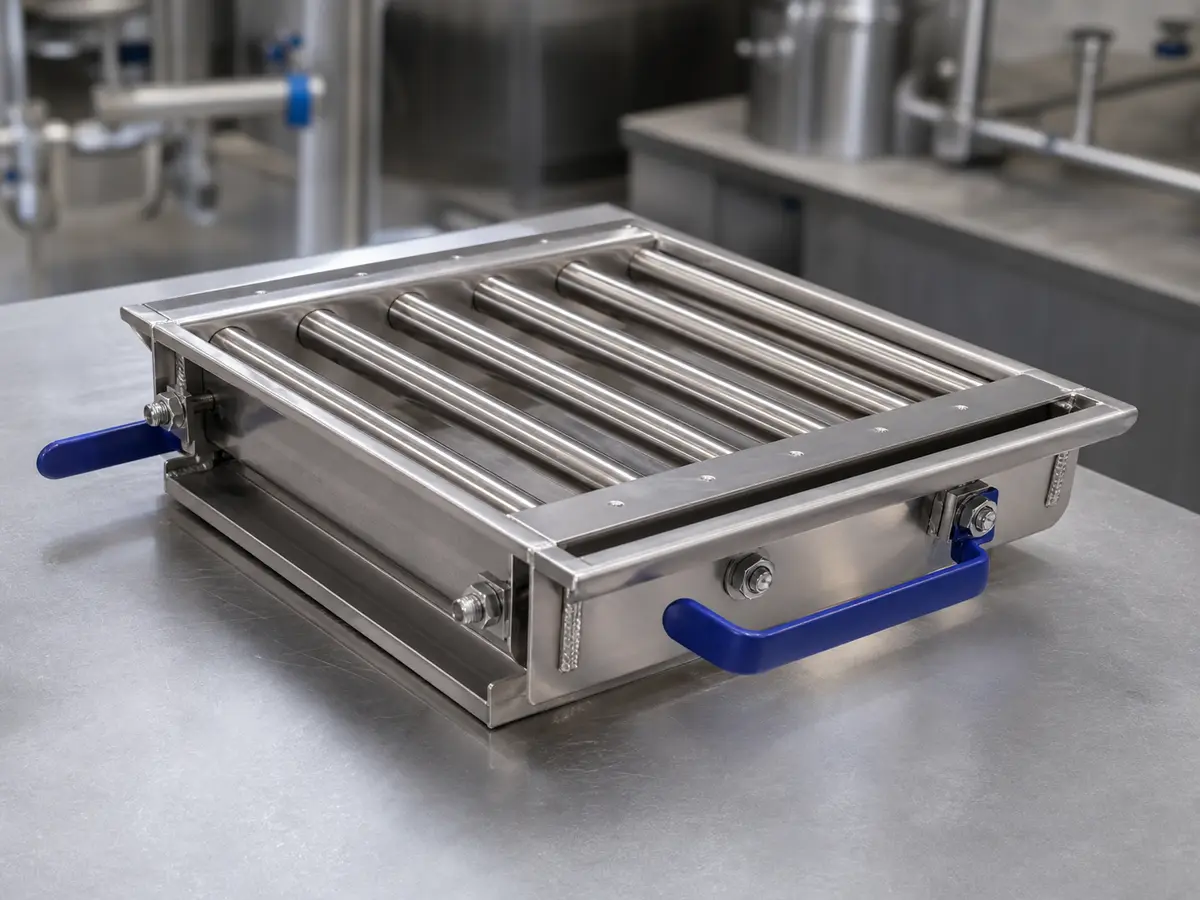
A magnetic tube is one magnetic element used for OEM integration, replacement, or a custom mounting arrangement. A magnetic grate combines multiple tubes in a frame to cover a hopper or chute opening. Choose the tube when you control the mechanical layout; choose the grate when you need a defined multi-tube assembly with known opening, spacing, orientation, and removal method.
Quick Comparison
| Factor | Magnetic tube | Magnetic grate |
|---|---|---|
| Supply scope | Individual magnetic element | Tubes plus supporting frame |
| Coverage | Depends on OEM placement | Defined by opening, rows and tube centers |
| Mounting | Threads, studs, handles or custom ends | Frame, supports, handles and retainers |
| Replacement | Individual element may be replaced | Tube or assembly replacement depends on construction |
| Primary buyer | OEM, integrator or maintenance replacement | Process user needing an assembly for a chute or hopper |
Choose a Magnetic Tube When
- You are designing a machine and can define every tube position.
- You need a replacement matching known diameter, length, magnetic length, and ends.
- The application requires a special mounting, handle, thread, or effective region.
- Coverage and safe removal will be engineered by the buyer or integrator.
Choose a Magnetic Grate When
- You need multiple tubes across a known round, square, or rectangular opening.
- A complete removable frame simplifies installation and cleaning.
- Tube spacing and rows must be controlled as one drawing.
- The frame needs defined orientation, support, handle, and retention.
Neither Choice Solves Poor Flow Automatically
Close tube spacing increases opportunities for particles to approach a magnetic surface but may bridge cohesive powder or restrict large granules. A single tube offers less obstruction but may leave uncovered flow paths. Review particle size, moisture, stickiness, bulk density, peak flow, chute angle, and product buildup.
Specify the Same Magnetic Test Before Comparing
Compare magnet material, construction, temperature rating, effective length, surface-field position, probe orientation, instrument, temperature, tolerance, or a fully defined pull method. A maximum number at one pole cannot demonstrate coverage across an entire grate.
Cleaning and Access
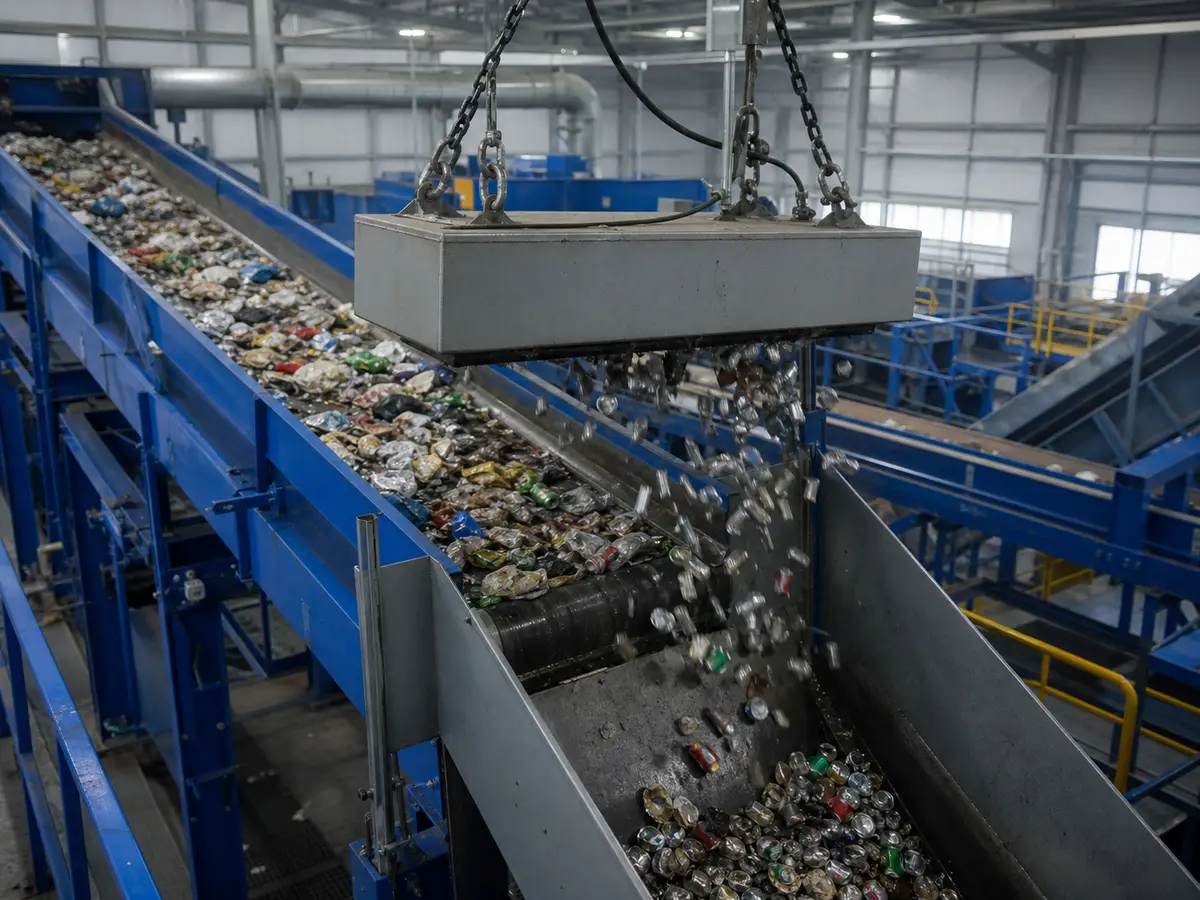
An individual tube may be easier to remove separately but can create multiple retainers and handling steps. A grate removes several tubes together but may be heavy and need greater pull-out space. Define isolation, containment of captured iron, cleaning tools, reinstallation checks, and whether an easy-clean structure is justified.
RFQ Information
Send material, particle size, moisture, temperature, bulk density, normal/peak flow, opening drawing, number of rows, tube center preference, mounting, contact material, finish, cleaning method, magnetic acceptance, quantity, and replacement compatibility.
Choose Single-Path Control or Opening Coverage
| Decision rule | Use a tube for a defined local flow path or custom machine interface; use a grate when multiple tubes must cover a chute opening and distribute product across poles. |
|---|---|
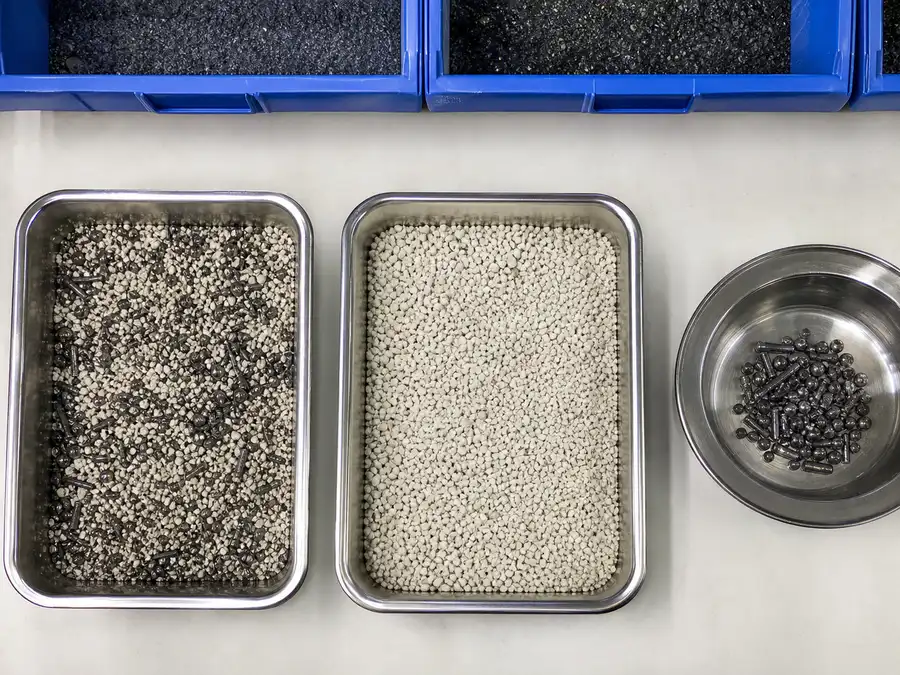
| Inputs to confirm | Opening and flow pattern, material size and cohesion; target iron such as fines, rust, wire or wear fragments, its typical size, loading and required residual; peak rate, tube spacing, row count, mounting and cleaning clearance. |
| Risk or limitation | One tube can leave bypass paths, while a grate can create bridging or difficult removal when open area is inadequate. |
| Buyer action | Overlay the proposed tubes on the actual opening and confirm flow and withdrawal with a drawing or representative trial. |
Engineering Conditions Behind the Recommendation
- A high surface reading does not by itself predict capture in flowing product.
- Field gradient, shell or sleeve thickness, spacing, distance from each particle to a pole, particle size and magnetic response, flow speed, product depth, bridging and contamination buildup all change the result.
- Mechanical passage capacity is not the same as effective separation capacity.
- Quote or test conditions must identify material, size distribution, moisture, bulk density, normal and peak rate, feed distribution, speed, layer or flow geometry, contamination loading and cleaning interval.
How We Apply This Comparison to Your Project
Magnetic Tube vs Magnetic Grate: What Is the Difference?: seller-side application review
- Your decision risk: Two structures can both remove ferrous material yet behave differently with thick layers, fine particles, sticky flow, continuous production or limited cleaning space.
- What we review: We compare your material, particle size, moisture, temperature, throughput, target contamination, installation position, available space and permitted downtime.
- What we recommend: We use the these trade-offs to select, configure or rule out each option instead of choosing from one headline parameter.
- Buyer value: This helps you avoid an unnecessary upgrade, reduce contamination and downtime risk, and purchase a structure that your operators can actually clean and maintain.
- Boundary: We do not call one option universally better; the result depends on the confirmed material path and acceptance target.
- Next step: Send the material and target, particle range, moisture, temperature, throughput, contamination, installation drawing, available space, cleaning preference and any sample or site video. Send the inputs for option comparison
Project Support
Need help selecting the right magnetic solution?
Send us your material, flow condition, target metal, capacity, installation space and any drawings or site photos. We will review the application and recommend the next practical step.
Frequently Asked Questions
Why is “Neither Choice Solves Poor Flow Automatically” important for this decision?
Close tube spacing increases opportunities for particles to approach a magnetic surface but may bridge cohesive powder or restrict large granules.
Why is “Specify the Same Magnetic Test Before Comparing” important for this decision?
Compare magnet material, construction, temperature rating, effective length, surface-field position, probe orientation, instrument, temperature, tolerance, or a fully defined pull method.
Why is “Cleaning and Access” important for this decision?
An individual tube may be easier to remove separately but can create multiple retainers and handling steps.