OSENC Magnetic Separation
Install a magnetic separator only from the approved project drawing and product-specific manual. Before startup, verify structure, lifting, magnetic clearance, alignment, rotation, material and iron discharge paths, guards, access, electrical conditions, and the agreed acceptance test.
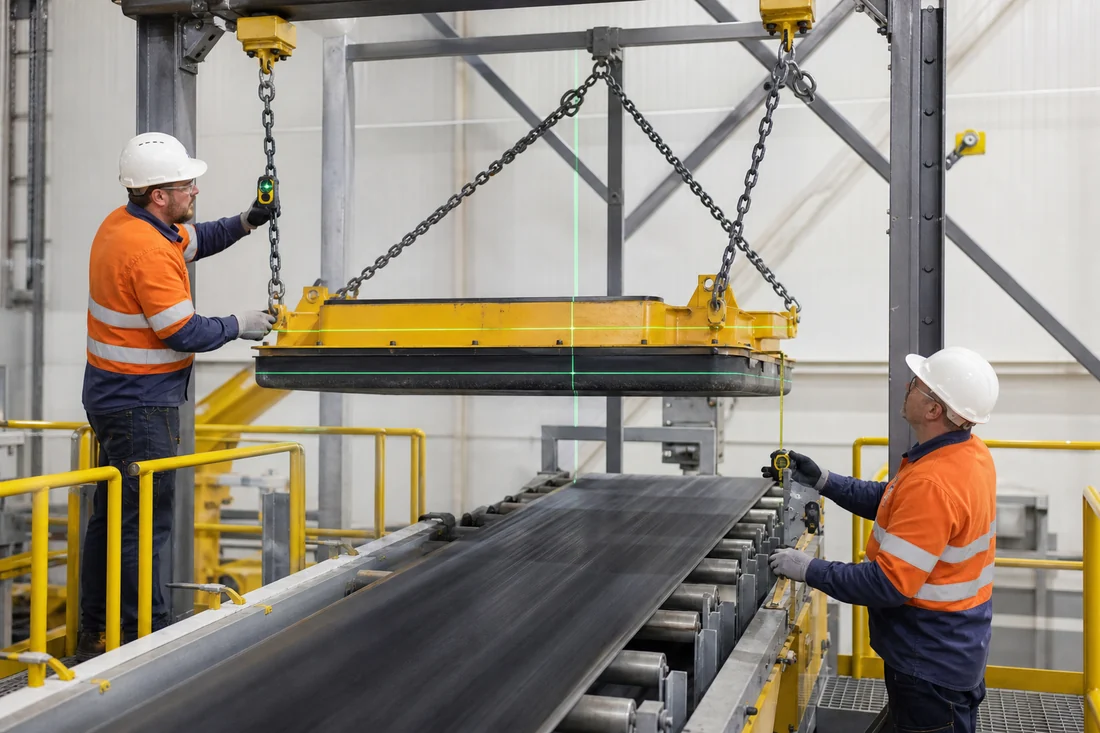
Before Delivery
- Approve interfaces, total envelope, weight, lifting points, and maintenance space.
- Confirm foundation/support loads and nearby steel structures.
- Confirm power, controls, environment, and cable scope where applicable.
- Plan safe access and collected-iron handling.
Receiving and Lifting
Inspect package damage, match items to the packing list, and use identified lifting points. Permanent magnets attract loose steel tools, chains, and nearby objects; establish a controlled area and follow site lifting procedures.
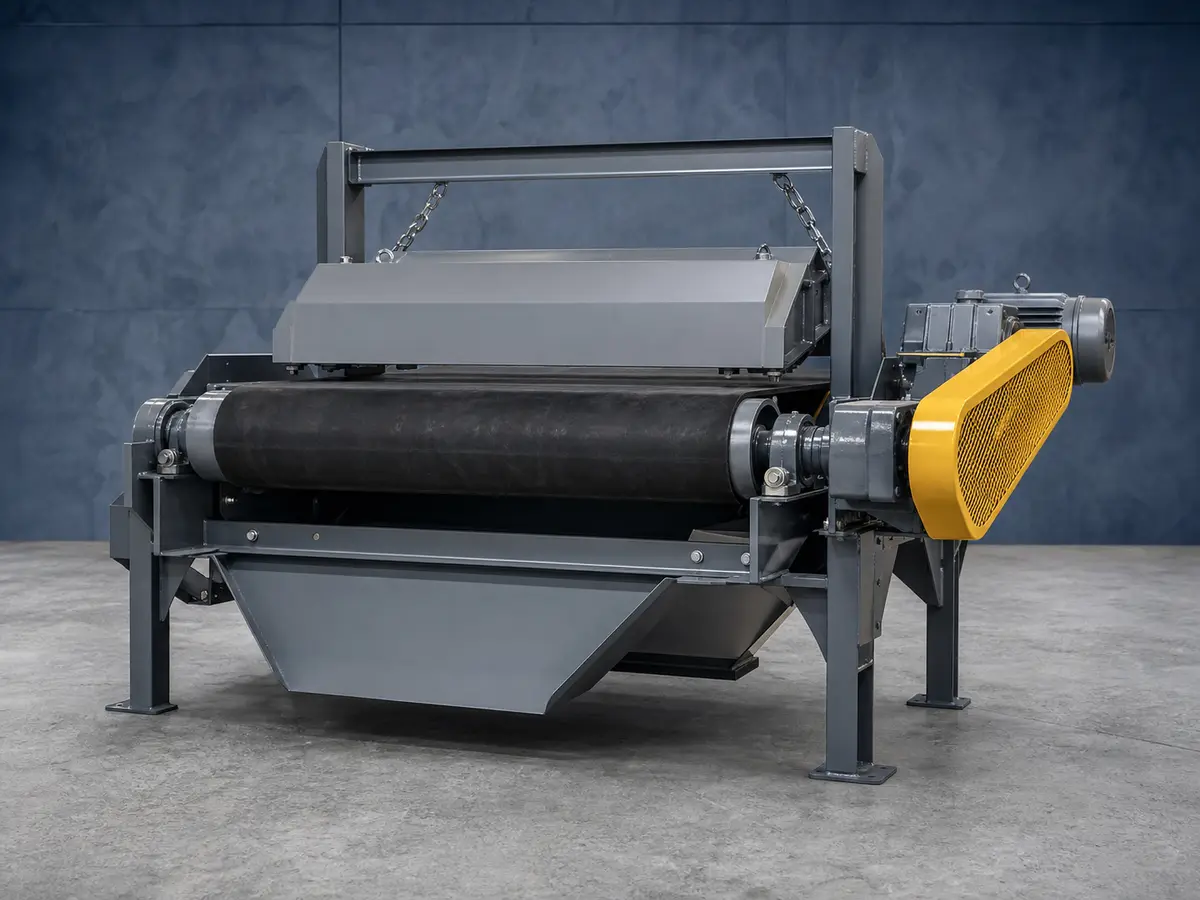
Mechanical Installation
- Level and align the frame without forcing distorted supports.
- Verify suspension height or drum/pulley interface from the stated datum.
- Confirm rotation direction before continuous operation.
- Check belt tracking, take-up, bearings, guards, fasteners, and splitter.
- Ensure material and captured iron cannot collide or return to the product stream.
Magnetic and Safety Clearance
Remove or review ferrous structure in critical field areas. Keep magnetic-sensitive devices and loose steel away. Personnel with medical implants must follow the equipment warning, site risk assessment, and device guidance.
Commissioning
- Run mechanical equipment without material and record observations.
- Introduce material gradually and check flow, vibration, buildup, and discharge.
- Verify normal and peak burden or feed.
- Test representative contamination with an approved safe method.
- Record configuration, measurements, result, and corrective adjustments.
- Train operators in cleaning, isolation, inspection, and restart.

First-Week Follow-Up
Recheck fasteners, alignment, belt tracking, bearings, buildup, cleaning frequency, splitter position, guards, and iron discharge after the first operating periods. Compare real peak feed with the design input and document all adjustments.
Do Not Treat This as the Product Manual
We provide this as a general checklist. The approved drawing, supplier manual, electrical diagram, safety assessment, and contract acceptance procedure take precedence.
Installation Data That Must Match the Approved Drawing
| Decision rule | Installation is complete only when position, orientation, support, utilities, guards, discharge, maintenance space and commissioning checks match the supplied equipment. |
|---|---|
| Inputs to confirm | Equipment model and mass, lifting points, working gap, belt or chute interface, direction of flow, power and controls, environment and access clearances. |
| Risk or limitation | A mechanically mounted separator can still fail its duty when the face height, rotation, splitter, belt tracking or collected-iron path differs from the approved layout. |
| Buyer action | Use a signed installation checklist with photographs, dimensions and no-load checks before introducing representative material. |
Safety Boundary Before Installation, Cleaning or Maintenance
- Before access, isolate and lock out the conveyor, separator drive and connected equipment under the site procedure; verify that movement cannot restart. A permanent magnet remains active after electrical isolation. Control suspended loads, pinch and nip points, attracted tools, loose steel, sharp collected iron and safe access around the belt and discharge zone.
- People with pacemakers or magnetically sensitive medical devices must follow medical-device and site restrictions; protect sensitive electronics and magnetic media.
- Our guidance is not a complete safe-work procedure. Approved manufacturer instructions, the site risk assessment, guarding and lifting plans, and lockout/tagout rules govern the work.
Engineering Conditions Behind the Recommendation
- Do not select from a surface Gauss value alone.
- Review field strength and gradient at the rated working distance, including the conveyor belt, burden depth and any protective plate.
- Belt speed, feed uniformity, target size, shape and magnetic response determine how much time and force are available for capture.
- Mechanical passage capacity is not the same as effective separation capacity.
- Quote or test conditions must identify material, size distribution, moisture, bulk density, normal and peak rate, feed distribution, speed, layer or flow geometry, contamination loading and cleaning interval.
How We Use This Technical Point in Selection
Magnetic Separator Installation and Commissioning Checklist: seller-side application review
- Your selection risk: A device name, surface Gauss value or static pull result can lead to the wrong purchase when material motion and working distance are ignored.
- What we review: We check your material, particle size, moisture, temperature, throughput, layer or flow geometry, target contamination, installation position and cleaning method.
- What we decide: We use the principle described above to compare magnetic circuit, exposure, retention and discharge conditions before we recommend or rule out a structure.
- Buyer value: This helps you reduce leakage risk, avoid an oversized or ineffective unit and connect the specification to a testable production objective.
- Boundary: We do not treat a simplified explanation as guaranteed separation performance; representative testing is needed when magnetic response or scale-up remains uncertain.
- Next step: Send the material and target, particle range, moisture, temperature, throughput, contamination, installation drawing, available space, cleaning preference and any sample or site video. Send the material and separation target
Project Support
Need help selecting the right magnetic solution?
Send us your material, flow condition, target metal, capacity, installation space and any drawings or site photos. We will review the application and recommend the next practical step.
Frequently Asked Questions
Why is “Receiving and Lifting” important for this decision?
Inspect package damage, match items to the packing list, and use identified lifting points. Permanent magnets attract loose steel tools, chains, and nearby objects; establish a controlled area and follow site lifting procedures.
Why is “Magnetic and Safety Clearance” important for this decision?
Remove or review ferrous structure in critical field areas. Keep magnetic-sensitive devices and loose steel away.
Why is “First-Week Follow-Up” important for this decision?
Recheck fasteners, alignment, belt tracking, bearings, buildup, cleaning frequency, splitter position, guards, and iron discharge after the first operating periods.