OSENC Magnetic Separation
Cleaning Frequency, Safety and Records
Clean a magnetic grate before accumulated iron or product buildup creates an excessive working gap, blocks flow, damages the surface, or releases contamination back into the process. Isolate the system, control strong magnetic attraction, remove and contain captured material using the approved method, inspect every tube and frame, then reinstall in the correct orientation with a documented check.
Request Product-Specific Cleaning Instructions Review Magnetic Grates
Set Frequency from Actual Load
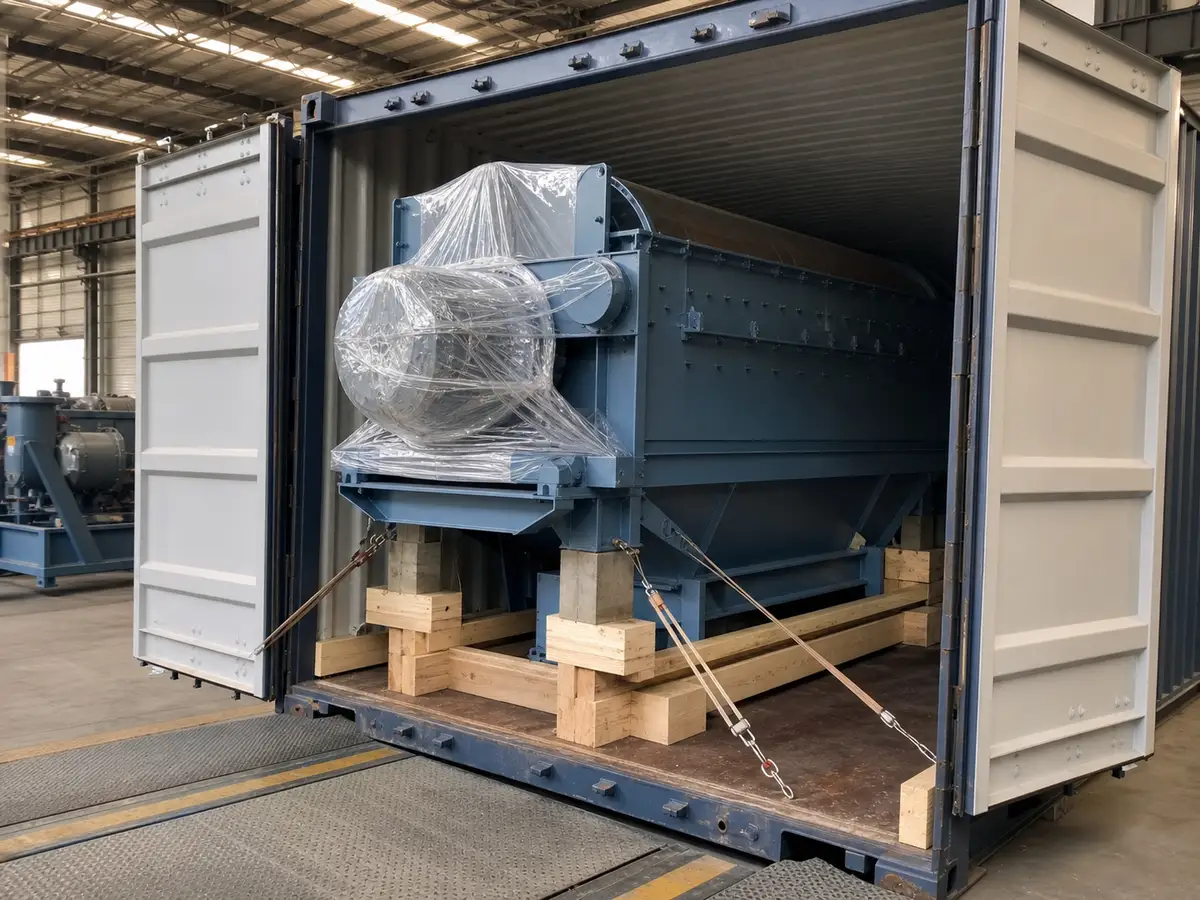
There is no universal “once per shift” interval. Start conservatively, record captured material and product buildup, then set a maximum interval that keeps performance and flow within the site’s control plan. Shorten the interval after maintenance, raw-material changes, upset conditions, or an increase in contamination.
Before Opening the Housing or Chute
- Stop and isolate all feed, pressure, vacuum, motion, and stored energy under the site procedure.
- Confirm the grate can be removed without material falling or creating exposure.
- Prepare non-loose tools, collection containers, protective equipment, and a controlled clean area.
- Keep steel tools, watches, devices, and other attracted objects away as required.
- Support the grate’s weight and provide enough withdrawal space.
Manual-Clean Grate Procedure
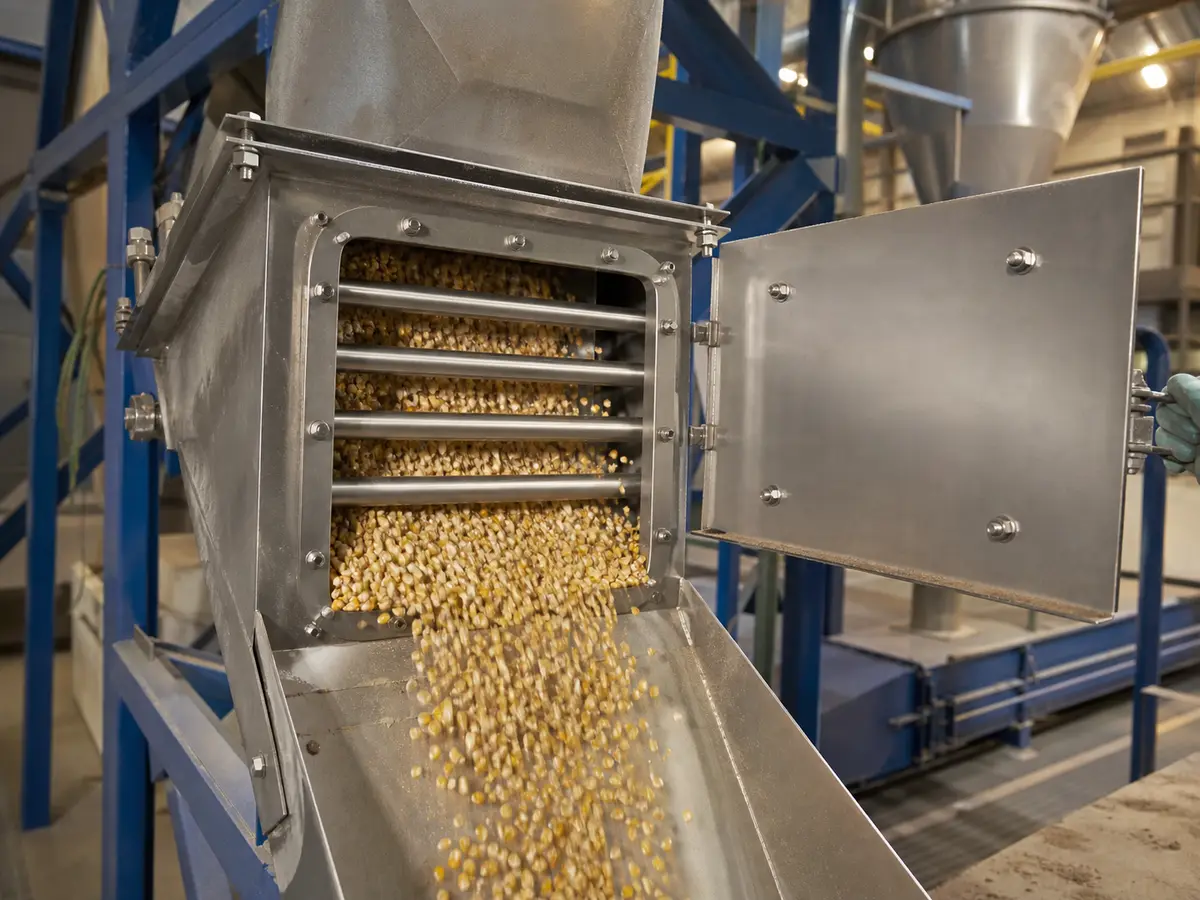
- Record the installed position and orientation before removal.
- Withdraw the grate slowly without striking the housing or adjacent equipment.
- Contain loose product and photograph contamination before disturbing it when investigation is needed.
- Move captured iron away using the approved scraper or cleaning method; keep fingers out of pinch and attraction zones.
- Clean remaining product with approved tools and chemicals.
- Inspect tubes, welds, frame, fasteners, handles, seals, and mounting.
- Reinstall in the correct orientation, secure all retainers, and verify closure before restart.
Easy-Clean Structure
An easy-clean magnetic grate releases captured iron by separating magnetic cores from outer collection sleeves. Follow the specified withdrawal order and support both parts. Confirm sleeves are intact, cores return fully to their operating position, and no contamination is trapped at seals or end features.
What Captured Material Tells You
| Observation | Possible meaning | Follow-up |
|---|---|---|
| Sudden large fragments | Broken upstream component or maintenance debris | Stop and inspect the likely source |
| Increasing fine wear particles | Developing abrasion or contact | Trend amount and analyze composition |
| Heavy product coating | Moisture, fat, static, or inadequate flow geometry | Review material condition and cleaning interval |
| Uneven loading | Poor feed distribution or blocked area | Inspect upstream chute and tube spacing |
Inspect Before Reinstallation
Look for dents, deep scratches, corrosion, pitting, cracks, damaged welds, loose handles, bent frames, worn sleeves, failed seals, and trapped material. If a product-contact or pressure boundary is damaged, quarantine the part for technical review rather than polishing away evidence.
Common Cleaning Errors
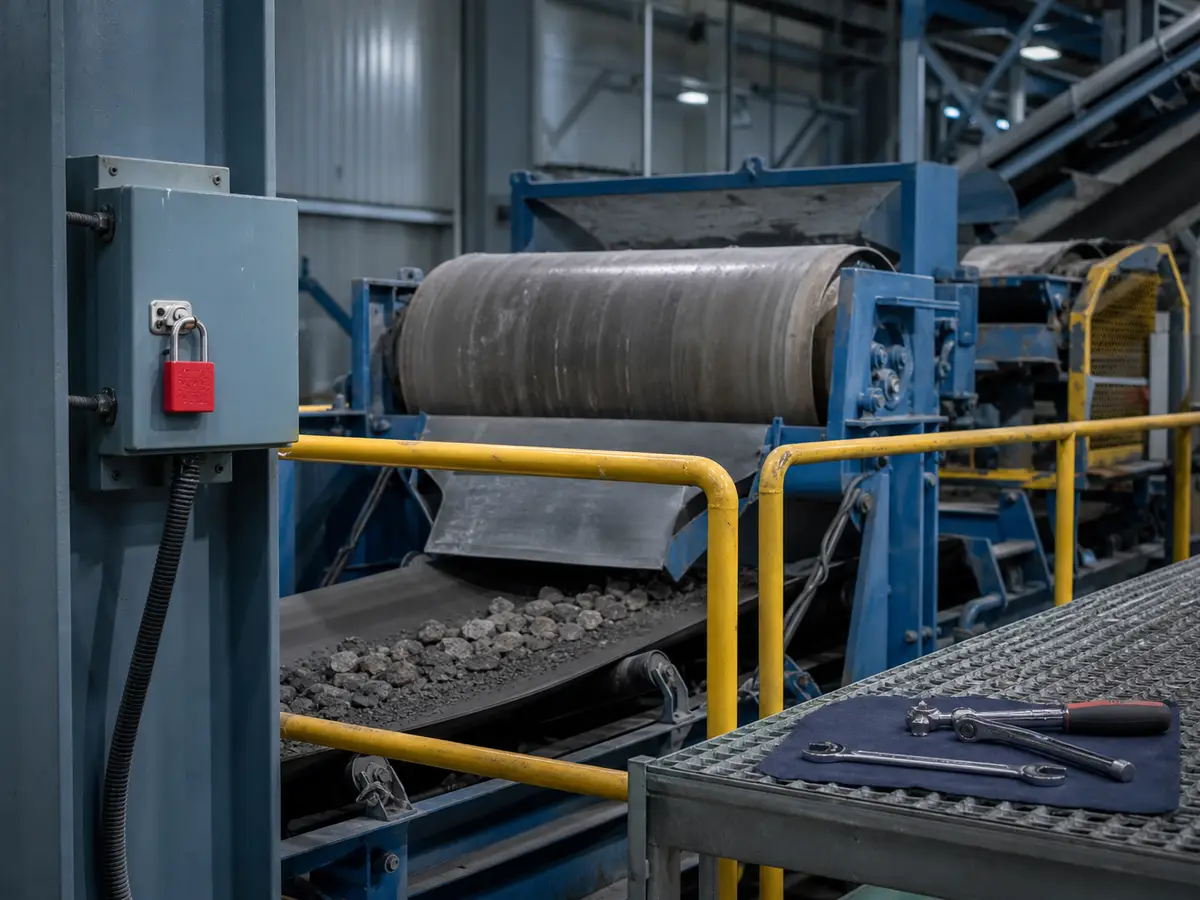
- Waiting until the grate is fully loaded with iron
- Using steel tools that snap toward the magnetic surface
- Allowing removed contamination to fall into an open product stream
- Using unapproved abrasive tools or incompatible chemicals
- Reinstalling the grate reversed, incomplete, or without seals and retainers
- Recording “cleaned” without documenting what was found
Cleaning Record
Record date, line, grate ID, product, run time, captured contamination type and approximate quantity, buildup, damage, cleaning method, photographs, source investigation, corrective action, reinstallation check, and operator.
What We Need to Configure This Project
Input set for How to Clean a Magnetic Grate Without Losing Control of Captured Iron
- How we use your data: We compare your material, contamination risk, production target and line interface before we configure a proposal or rule out an unsuitable option.
- Material: name and composition; dry or wet; powder, granule, lump, fibre or slurry; minimum, maximum and typical particle distribution; moisture, stickiness, tendency to cake or bridge, abrasiveness, corrosiveness, bulk density, normal temperature and maximum temperature.
- Production and target: normal and peak throughput, continuous or batch feed, feed uniformity, contaminant or recovery target, magnetic response if known, typical and maximum target size, initial concentration, acceptable residual and whether product loss is permitted.
- Installation: hopper, chute or pipeline location, opening or flange dimensions and standard, flow direction, product head, extraction and cleaning space, upstream and downstream connections; cleaning method, permitted shutdown, contact-material, wear and corrosion requirements; indoor, outdoor, washdown, high-humidity, dusty or hazardous-area conditions.
- Supporting project files: power and control data for any actuator or automated cleaning option, plus available air supply and pressure where applicable; destination country; current drawings, site photographs, running video and a representative material/contaminant sample when testing is needed.
- What you receive next: We use the confirmed inputs to prepare a project-specific drawing and inspection plan. We do not treat performance as confirmed until the agreed design and any required representative test or site acceptance establish the result.
Project Support
Need help selecting the right magnetic solution?
Send us your material, flow condition, target metal, capacity, installation space and any drawings or site photos. We will review the application and recommend the next practical step.
Frequently Asked Questions
Why is “Set Frequency from Actual Load” important for this decision?
There is no universal “once per shift” interval. Start conservatively, record captured material and product buildup, then set a maximum interval that keeps performance and flow within the site’s control plan.
Why is “Easy-Clean Structure” important for this decision?
An easy-clean magnetic grate releases captured iron by separating magnetic cores from outer collection sleeves. Follow the specified withdrawal order and support both parts.
Why is “Inspect Before Reinstallation” important for this decision?
Look for dents, deep scratches, corrosion, pitting, cracks, damaged welds, loose handles, bent frames, worn sleeves, failed seals, and trapped material.