OSENC Magnetic Separation
Incoming, Routine and Replacement Checks
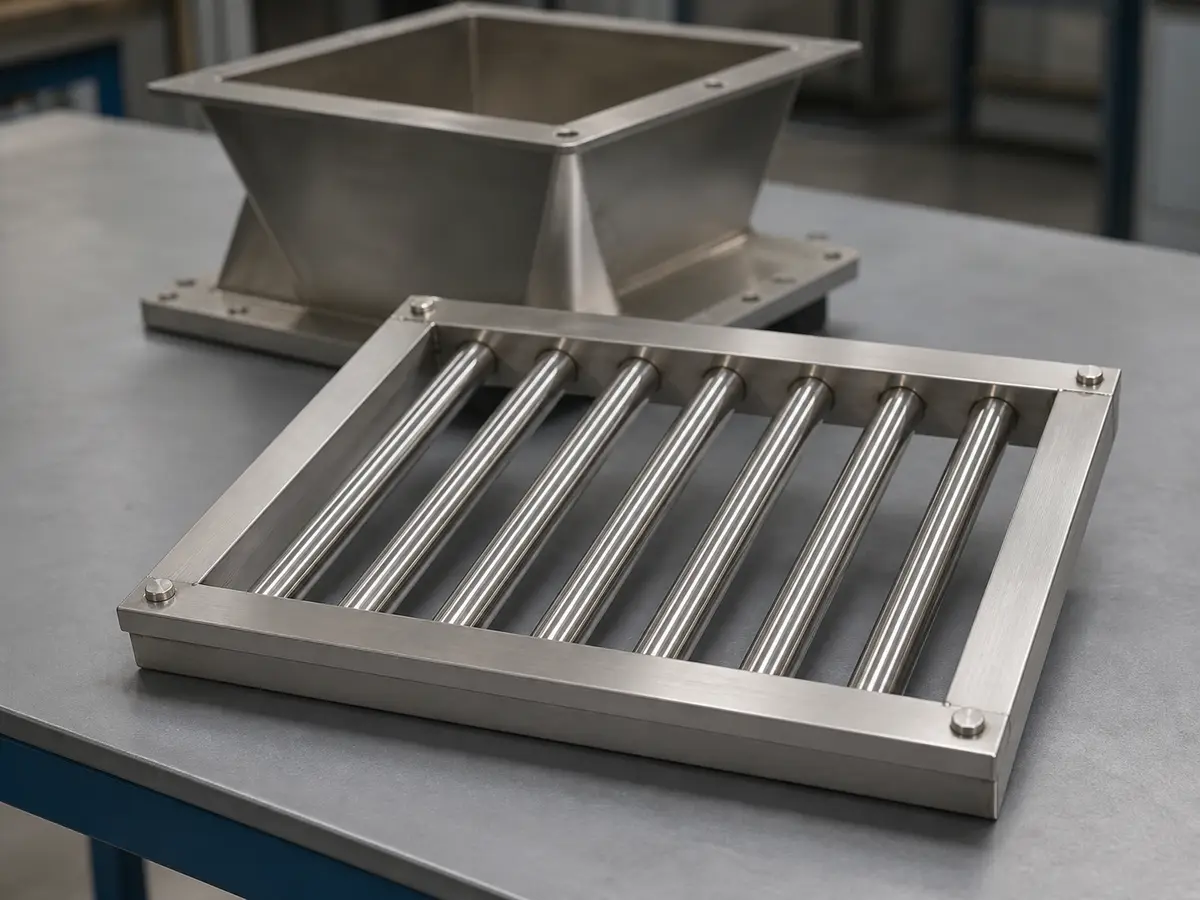
Inspect a magnetic tube by checking traceable identity, dimensions, effective magnetic length, surface and weld condition, end fittings, cleanliness, and a magnetic measurement made at defined positions with a specified instrument and temperature. A single maximum-Gauss reading is not enough to establish uniformity, pull performance, product-contact suitability, or capture efficiency.
Request a Tube Inspection Specification Review Custom Magnetic Tubes
Three Different Inspection Purposes
| Inspection | Main purpose | Useful baseline |
|---|---|---|
| Incoming | Confirm the supplied tube matches the order | Approved drawing and purchase specification |
| Routine | Detect damage, buildup, corrosion, or change in service | Accepted initial measurements and photographs |
| After an event | Assess drop, impact, overheating, chemical exposure, or abnormal wear | Event record plus original baseline |
Visual and Dimensional Check
- Part number, batch, length, diameter, and effective magnetic region
- Thread, stud, handle, seal, and mounting interface
- Dents, deep scratches, cracks, pitting, bulging, and deformation
- Weld or end closure condition and evidence of leakage
- Residue, adhesive product, metal buildup, and cleaning damage
- Material or finish documents required by the order
Define the Magnetic Measurement
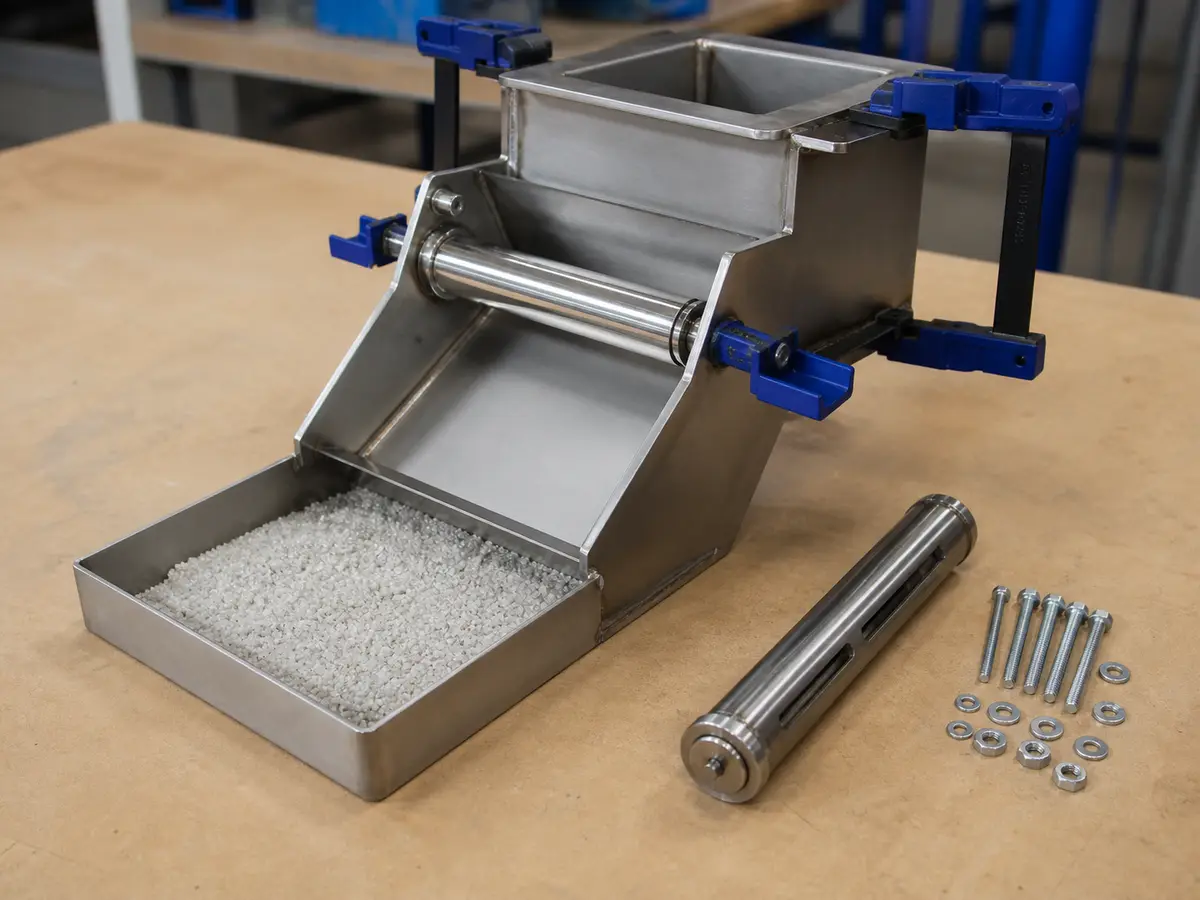
Record instrument model, probe type and orientation, calibration status, units, tube temperature, measurement grid, contact or stand-off distance, pole location, and acceptance tolerance. Locate magnetic poles consistently; small probe-angle or position changes can produce different values near a steep field gradient.
A Practical Mapping Method
- Clean and stabilize the tube at the specified temperature.
- Mark the effective magnetic length and repeatable axial positions.
- Find the pole pattern using the approved method.
- Measure at the defined pole positions and orientation.
- Repeat questionable points rather than reporting only the highest value.
- Compare the map with the approved acceptance criterion and baseline.
The exact grid and tolerance must come from the product specification; we do not set a universal Gauss limit.
Gauss and Pull Tests Answer Different Questions
Surface flux density describes the field at a location. A pull test also depends on the test piece, contact area, material, thickness, surface condition, direction, gap, fixture, and pull rate. Do not compare pull values unless the complete method is the same. See Gauss vs pull force.
Cleaning Before Inspection
Follow the approved product and site cleaning procedure. Prevent trapped sharp particles from scratching the tube and do not use unapproved chemicals or abrasive tools. Control the attraction of steel tools and keep removed contamination from returning to product. Dry and inspect crevices and end closures after cleaning.
Remove from Service and Review If
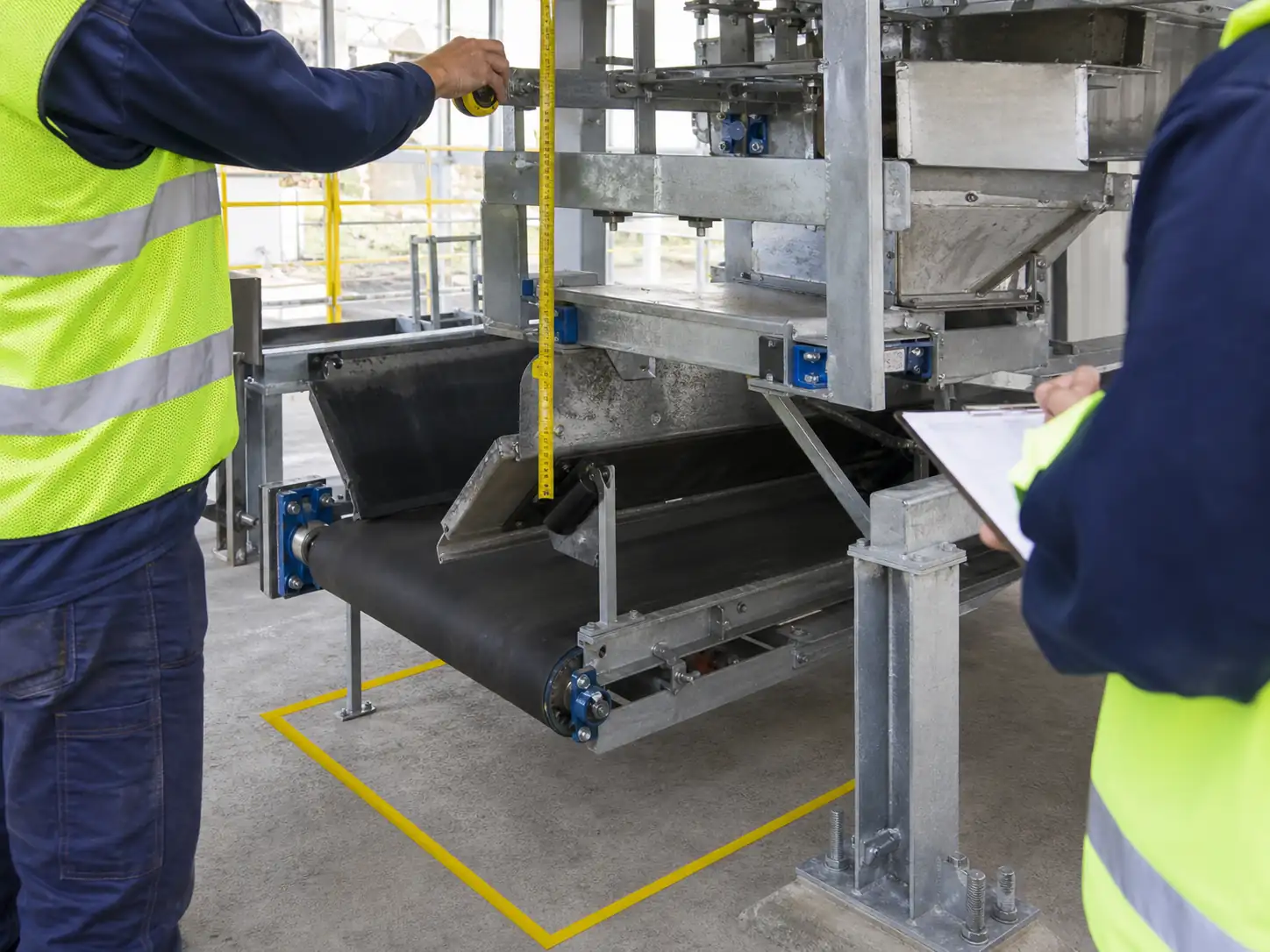
- The tube is cracked, punctured, leaking, deeply pitted, or significantly deformed.
- An end fitting, weld, seal, or mounting point is loose or damaged.
- Contact-surface integrity or required hygienic condition cannot be restored.
- Magnetic readings change beyond the agreed repeatability and tolerance.
- The tube experienced unapproved heat, impact, chemical, or pressure exposure.
Inspection Record
Record tube ID, location, service time, product, cleaning method, visual findings, dimensions, instrument and calibration, measurement grid and values, photographs, disposition, inspector, reviewer, and date.
Inspection Decisions for Keeping a Tube in Service
| Decision rule | Evaluate surface damage, welds, straightness, end fittings and magnetic readings together; a high local reading does not excuse a damaged food-contact or pressure boundary. |
|---|---|
| Inputs to confirm | Tube identity, drawing, mounting orientation and end connections, service material, cleaning chemistry, temperature history, impact or abrasion, isolation method, withdrawal and inspection space, test instrument, grid and prior readings. |
| Risk or limitation | Remove the tube from service for cracks, open welds, severe dents, corrosion penetration, loose ends or other damage that can release material or prevent safe cleaning. |
| Buyer action | Photograph defects, record measurement positions and compare with the approved acceptance and replacement criteria. |
Safety Boundary Before Installation, Cleaning or Maintenance
- Stop and isolate product flow, pressure, actuators and connected machinery before withdrawing or cleaning magnetic elements. The magnetic field remains active outside the process. Prevent hand trapping between magnetic parts and steel, control attracted tools and sharp captured fragments, and contain removed contamination so that it cannot return to product.
- People with pacemakers or magnetically sensitive medical devices must follow medical-device and site restrictions; protect sensitive electronics and magnetic media.
- Our guidance is not a complete safe-work procedure. Approved manufacturer instructions, the site risk assessment, guarding and lifting plans, and lockout/tagout rules govern the work.
What We Need to Configure This Project
Input set for How to Inspect and Test a Magnetic Tube
- How we use your data: We compare your material, contamination risk, production target and line interface before we configure a proposal or rule out an unsuitable option.
- Material: name and composition; dry or wet; powder, granule, lump, fibre or slurry; minimum, maximum and typical particle distribution; moisture, stickiness, tendency to cake or bridge, abrasiveness, corrosiveness, bulk density, normal temperature and maximum temperature.
- Production and target: normal and peak throughput, continuous or batch feed, feed uniformity, contaminant or recovery target, magnetic response if known, typical and maximum target size, initial concentration, acceptable residual and whether product loss is permitted.
- Installation: hopper, chute or pipeline location, opening or flange dimensions and standard, flow direction, product head, extraction and cleaning space, upstream and downstream connections; cleaning method, permitted shutdown, contact-material, wear and corrosion requirements; indoor, outdoor, washdown, high-humidity, dusty or hazardous-area conditions.
- Supporting project files: power and control data for any actuator or automated cleaning option, plus available air supply and pressure where applicable; destination country; current drawings, site photographs, running video and a representative material/contaminant sample when testing is needed.
- What you receive next: We use the confirmed inputs to prepare a project-specific drawing and inspection plan. We do not treat performance as confirmed until the agreed design and any required representative test or site acceptance establish the result.
Project Support
Need help selecting the right magnetic solution?
Send us your material, flow condition, target metal, capacity, installation space and any drawings or site photos. We will review the application and recommend the next practical step.
Frequently Asked Questions
Why is “Define the Magnetic Measurement” important for this decision?
Record instrument model, probe type and orientation, calibration status, units, tube temperature, measurement grid, contact or stand-off distance, pole location, and acceptance tolerance.
Why is “A Practical Mapping Method” important for this decision?
The exact grid and tolerance must come from the product specification; we do not set a universal Gauss limit.
Why is “Gauss and Pull Tests Answer Different Questions” important for this decision?
Surface flux density describes the field at a location. A pull test also depends on the test piece, contact area, material, thickness, surface condition, direction, gap, fixture, and pull rate.